
Building farming systems resilience and future proofing the impacts of drought through accelerating the adoption of proven cost-effective and yield responsive soil and fertiliser management practices by farmers across southern Australia
The project focuses on accelerating adoption of proven soil resource management practices offering significant opportunity to build farming systems drought resilience, reduce yield variability, increase sustainability and profitability.
On Eyre Peninsula, the project is focus is
Improving productivity of low rainfall problem sands with a reliable break crop (lentils) with soil amelioration on EP.
- Grow a higher value break crop than current medic pastures
- Improve cover and production on sandhills
- Provide a good disease/nutrition benefit to the following crop
- Currently lentils at 0.3-0.4t/ha still return more than wheat
- Field peas are risky on these soil types too, vetch provides a good break but has a low return
- Some are growing lentils in the rest of the paddock, but leaving out the problem sandy soils, creating issues with management
- Improve overall paddock profitability and make the system work as a whole
- Series of 3 workshops/crop walks per group.
- 3 groups on EP, target 10-15 participants per group.
- Elders staff to coordinate the groups, facilitate the sessions, organise catering and venues.
- Facilitation training offered as part of the project, delivered by Beck Burgess, Burgess Consulting.


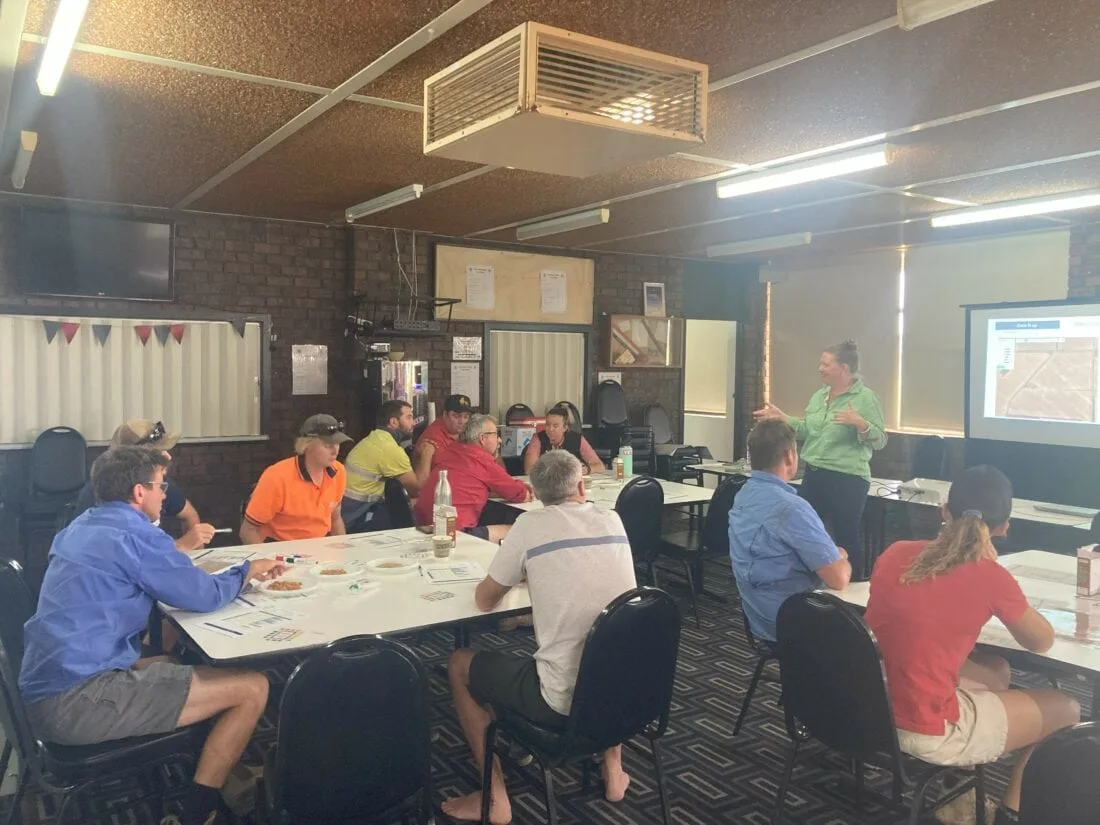


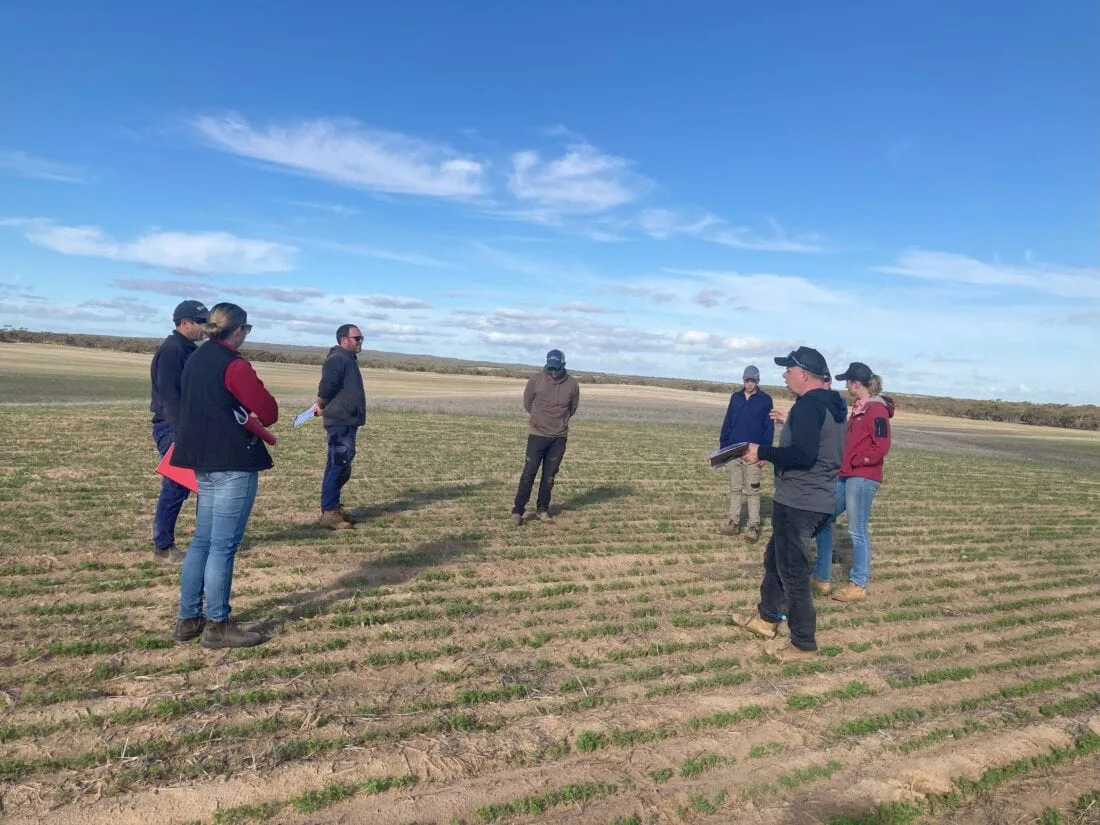
Key take-home messages from the field demonstrations and extension activities
Soil Constraints and Lentil Production
• Lentils struggle in saline soils and benefit from precise sowing methods like on-row sowing.
• Deep ripping significantly improves pulse crop returns compared to cereals.
• Fertiliser placement is critical; MAP (lower salt index) is better for lentils on flats, while DAP suits cereals on sandhills.
Amelioration Techniques
• Deep ripping enhances soil structure but raises concerns about reduced ground cover and erosion.
• Spading and delving improve clay distribution and long-term productivity.
Nutrition and Testing
• Lentils require phosphorus (P) but no nitrogen (N). Tissue testing is essential for identifying nutrient deficiencies.
• Salinity tolerance varies by crop (for example, barley > wheat > lentils).
Agronomic and soil management
• Salinity significantly limits lentil establishment; management strategies like straw mulching improve results.
• On-row sowing increases germination rates due to better moisture retention and reduced salinity effects.
• Sequential crop selection post-amelioration (for example, cereals for soil cover, pulses for economic return) is essential.
Evaluation and Feedback
- Farmers reported gaining valuable insights into soil management and lentil production.
- Peer-to-peer knowledge sharing was evident, and participants expressed interest in adopting new practices.
- Engaging with agribusiness (such as Elders) to coordinate the groups was valuable. It brought in a cohort of farmers who may not have normally been involved in such group extension activities.
- Drought conditions impacted on the project. The late rainfall affected germination and biomass production.
Future opportunities
- Long-term (5-year) projects are necessary for sustained practice changes.
- Improved tools for mapping and VRT integration are required.
- There is a range of innovative tools for mapping complex soil types within paddocks (constrained flats, profitable loams/mid slopes, sands). Therefore, a training opportunity for agronomists and growers to show them how to use these tools (even if it’s just the ability to zone a paddock for monitoring purposes) would be a worthwhile initiative.
Conclusions
- This project emphasised the value of targeted soil management practices to improve the performance of producing lentils on sandy soils.
- The opportunity to transform sandy soils from challenging, often low-producing assets into highly productive soils was demonstrated, and this will provide further incentives for farmers to better manage such soil types.
- Through workshops, field trials, and collaborative efforts with agronomists, outcomes from the project will help foster sustainable practices and enhance regional agricultural resilience
This page was last updated on 6 January 2026.
Share this project:
You Might Also Like
On-Farm Weather Stations & Moisture Probe adoption
Expanding the reach and promotion of “Web Wednesday” by involving additional groups across a wider geographic area. Providing access to existing weather station set-up, maintenance & calibration resources, either via…
Far West Young Farmers – Drought Resilient Decision Making & Peer Learning Network
This project will support young farmers (18 to 35 years of age) in building resilience and improving decision-making in response to drought and seasonal variability. Through a series of peer-to-peer…
Water quality in extensive sheep grazing systems
Water quality factors such as total dissolvable salts, temperature, mineral composition, pH, and microbial load can differ between their sources. Further, run off from pasture herbicides and fertilisers may be…
Review of target values for soil performance indicators and their interdependencies
Complete a survey provided by Federation University identifying key factors and existing resources to support project implementation. This will include: • Identification and sharing of existing interpretation tables and assessments…
Eyre Peninsula internship in applied grains research 2027 (SA Drought Hub Contribution)
SA Drought Hub contribution towards grains research intern on EP for 2027, to be hosted by EPAG Research. This page was last updated on 17 June 2026.
Derisking the sowing program on EP – a comparison of different seeding systems and crops in 2026
The Minnipa Agricultural Centre operates two broadacre seeding systems. One is a tyne-based Horwood Bagshaw Precision Seeding System (PSS), the other is a RootBoot Razor, single disc hybrid system. The…
Eyre Peninsula internship in applied grains research 2027
To improve the capacity of grains research, development and extension in the Eyre Peninsula region through the employment of an annual intern within local research organisations in 2027. To further…
Soil CRC Adoption Activities
Soil CRC presentations at current group event Sandy Soils Amelioration day/half day with CSIRO Soil CRC presentations at current group event – MAC Field Day This page was last…
Plan 2 Profit upper EP 2026
Targeted at younger farmers on upper EP, this project aims to train a minimum of 10 farm businesses to: – Improve farm business financial literacy – Set goals and develop…
Risky Business Workshops for EP 2026
The “Risky Business” game to be delivered in person at 3 locations on EP, tentatively Wudinna, Rudall and Wirrulla (TBC). Up to 30 participants per workshop. Aim of improving understanding…