
Lentil ‘On Row Sowing’ | Learnings from the YP
Maximising Moisture, Increasing Yield
With a run of dry starts in recent seasons, some SA farmers are turning to on-row sowing in lentils—and for good reason.
After years of trial and refinement, here are practical insights, setup tips, and non-negotiables from YP farmer Ben Wundersitz of Anna Binna, that have resulted in emergence gains and yield increases in challenging seasons and soil types.
Anna Binna Machinery & Setup
We’re running a 24m Flexicoil 5500 on 10-inch spacing, paired with ¾-inch Dutch Industries points (similar to AtomJet). We have moved back to a narrower 3/4 inch point limit soil throw while sowing at around 8.2 km/h.
If soil throw becomes an issue, we simply back off the speed a touch. However, we’ve found less soil throw in the old row versus between rows, making this a non-issue in most paddocks.
Some key setup learnings:
- Disciplined harvest height is an absolute must & it makes a massive difference. Because we cut low and clean, 24-hour sowing is possible with no blockages – especially when dry sowing.
- Ensuring your harvester chopper system is the best it can be to spread residue & reduce clumping. Sharp blades, be disciplined with using the secondary knifes when necessary. A better spread will ultimately give a more uniform shading effect on row in the summer.
- Upgrading to stronger RTK signals (instead of relying on RTK Extend or X-Fill) has improved accuracy by another ~5%.
- Two-track RT John Deere tractors give us much straighter runs compared to our previous articulated JD – we were around 60% on-row with the articulated, but now far better.
Even being 2 cm off the row still gives most of the benefits—handy if you need to tweak for stubble flow.
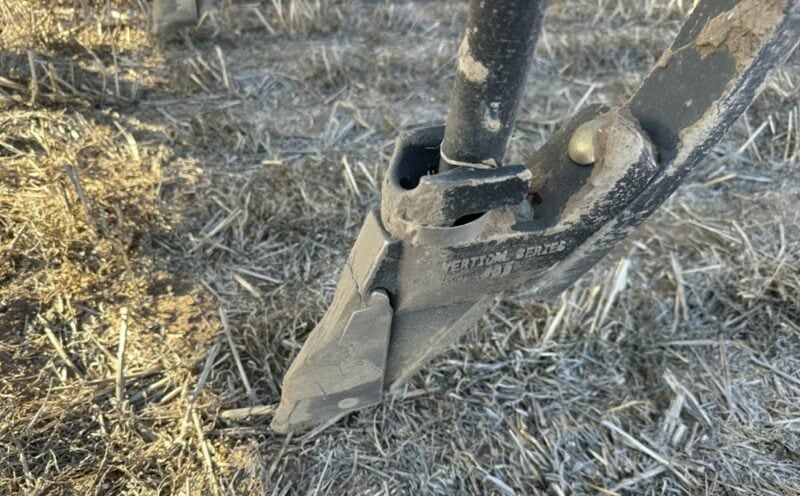
On-Row Sowing – Why It Works
Since adopting on rowing sowing, it has given us the biggest free kick to increase to particularly lentil yields (also better emergence of cereals) since the move to no-till in 2000.
In low rainfall seasons and hostile soils, the strategic placement on the seed row—on or near last year’s stubble line—is delivering consistent emergence gains across all our soil types.
Here’s why:
- More soil moisture retained under the stubble row.
- Lower surface salinity where present due to increased shading over the summer.
- Residual fertiliser sometimes available in the row.
- Softer soils, especially if paddocks were rolled.
- Fewer clods and improved seed-to-soil contact.
We now sow:
- 60% of our program on the row in lower rainfall zones (below 450mm).
- 40% just 20mm off the row in higher rainfall areas where moisture isn’t as limiting.
In short: emergence is better, crops are more even, and we’re getting more bang for buck with no added input.
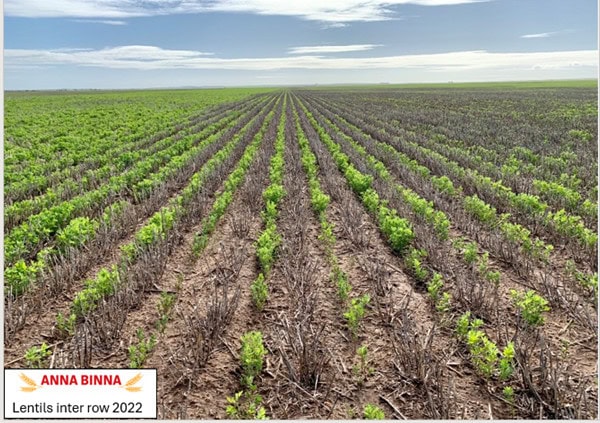
Lentils on the next run in the same paddock.
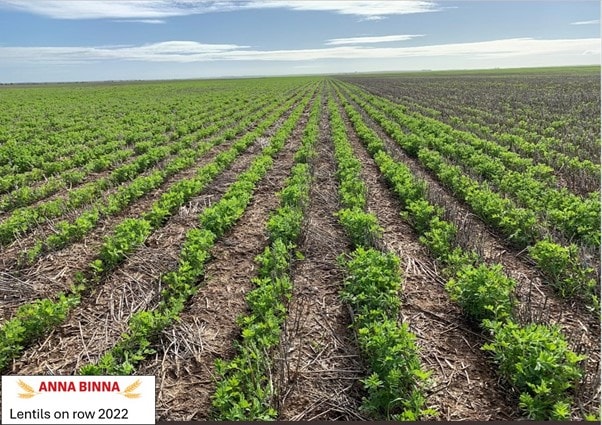
Nailing Accuracy in the Paddock
If you’re serious about on-row sowing, repeatable accuracy matters. Here’s what’s working for us:
- Top-quality RTK signal is a must. RTK Extend or X-Fill drops you 2cm+ off target—fine for spraying, not seeding.
- We have installed our own RTK base stations on our blocks that had poor coverage and these can be shared with neighbours.
- Use a rear receiver (instead of just relying on steering) – it’s proven more accurate for us.
- A Pro Tracker steering hitch unit is another option to increase accuracy; we used this prior to using a rear receiver
- Do your TCM (Tilt) and roll calibrations properly—every season.
- Same direction headlands every year helps immensely. We stick a simple sticker on the windscreen as a reminder.
- Heavier air drills track straighter than lightweight cultivators.
- Single-track tractors outperform articulated units in line accuracy.
- Record any line shifts, and back up everything. It’s vital for future seasons.
- If your lines are totally out of whack, consider a 90° sowing reset to avoid fishtailing corrections for years.
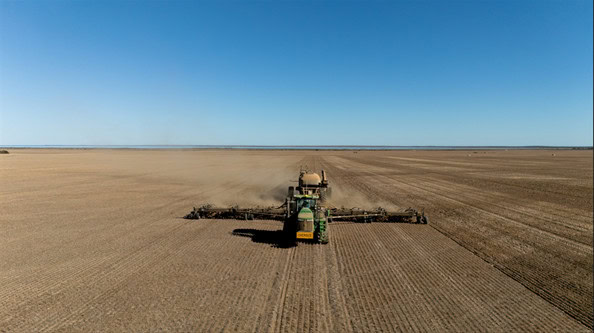
Image: Sowing 2024
Non-Negotiables
Let’s be clear—there are some absolute “musts” for on-row sowing success:
- Harvest height discipline is critical. Poor cutting = poor sowing
- Use choppers that actually chop! New blades, use secondary knives, modify if required to do the best job you can!!
- Slash headlands or flattened zones if needed to give your bar the best chance to run clean.
Final words from Ben
On row sowing is the biggest free kick in crop yields since we started no-till farming. The emergence and yield gains we’re seeing, especially in hostile soils, prove this practice isn’t just doable—it’s a game-changer.
And when we hear, “The bar just wants to go through the field,” as an excuse for skipping on-row sowing in tough country—I call BS.
Got questions for Ben or want to share your own setup, AIR EP would like to hear from you! Contact one of our team members.
GRDC have funded the project: Establishing and growing lentils on challenging soil types on the Eyre Peninsula, Project code: AIP2504-001SAX.
For more information about the project, visit https://airep.com.au/research/growing-lentils-on-challenging-soils-on-eyre-peninsula/