PIRSA Native Budworm Update – 16 October 2025
Native Budworm populations were a hot topic of conversation at the Low and Medium Rainfall RD&E Committee Meetings last week, and during the Sticky Beak Days held in various locations between September and October. Farmers and agronomists in all major growing areas detected populations in cereals, canola and legumes, with many conducting sweeps to determine threshold limits.
As reported in the recent PIRSA PestFacts newsletter, the moth trapping network detected the following numbers across the previous 2 week period:
- Moderate flights (140 to 260 individuals) at Bordertown, Jamestown, and Cummins.
- Light activity (under 60 individuals) at Port Broughton, Kimba, Laura Bay, Mudamuckla, Penong, and Talia.
Check the latest native budworm moth activity through MothTrapVis (Cesar Australia).

MothTrapVis map showing native budworm trapping between 7 to 10 October.
Recent Photos
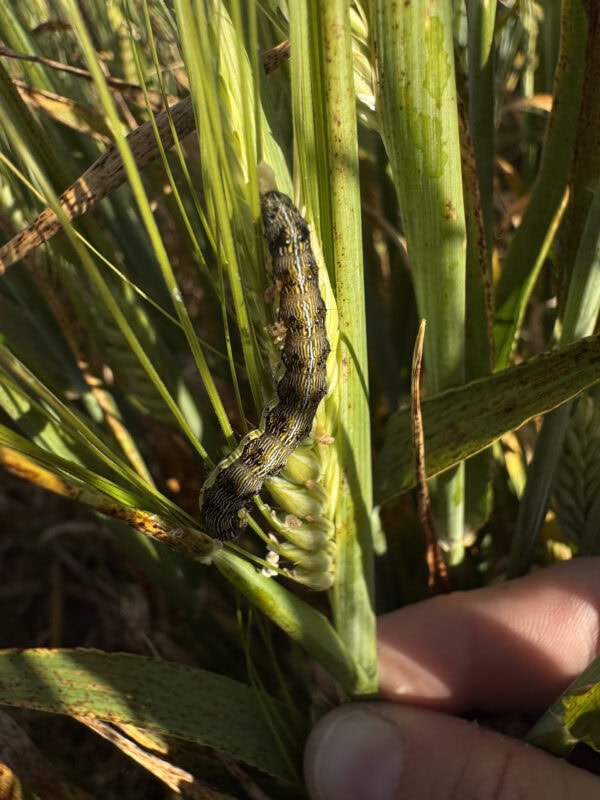
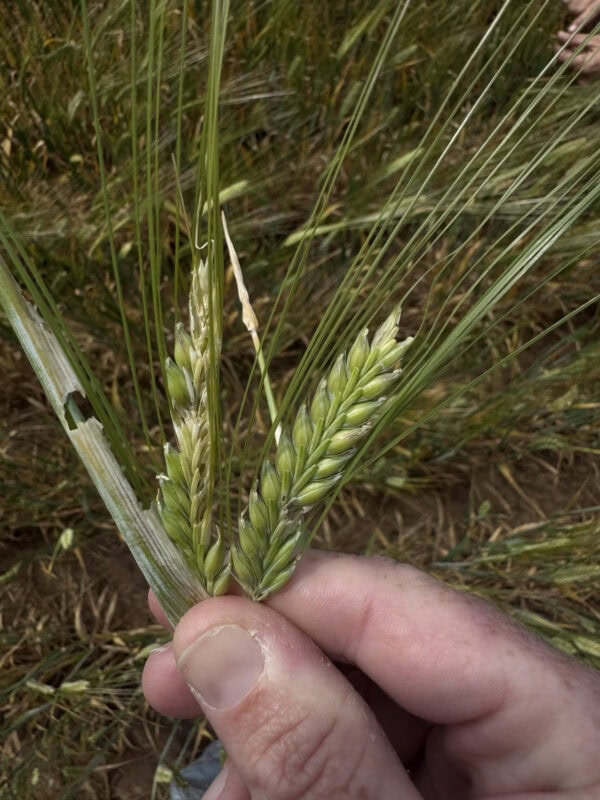
Image Left: Native budworm found in a barley crop near Ceduna on 24 September.
Image Right: Damage found in a barley crop near Streaky Bay on 9 October.
Managing Native Budworm
Caterpillar numbers largely determine potential crop damage, and moth flights are only an indication of risk. We’ve had many reports of caterpillars, even in cereals in areas with high trapping numbers. Early observations are required as small caterpillars are easier to manage.
The native budworm spraying threshold provides a more precise measure of potential loss. For example, 1 caterpillar per 10 sweeps equates to 20,000 caterpillars per hectare in pulse crops (DPIRD).
Refer to DPIRD’s native budworm spraying threshold factsheet for more on spraying economics.
Always apply insecticides according to label and APVMA permit instructions. Consider the impact on beneficial insects before making spray decisions.
Report to PestFacts
The PestFacts SA team always wants to know what invertebrates you find in your crops and pastures, whether it’s a pest, beneficial, or unknown species. We even want to know about the usual pests. Keep an eye on PestFacts for further updates.
Please send your reports or identification requests via the PestFacts map.
Subscribe
To sign up to the PestFacts Newsletter, or other PIRSA newsletters, simply click this link to visit the PIRSA Newsletter Subscription Centre.