Are you seeing any frost damage this harvest?
Back in early October, AIR EP hosted a frost crop walk to the GRDC Frost trial sites being delivered by EPAG Research in the Tooligie area. Here are some notes that were provided on the day, which include some key learnings from EP frost research so far, and the number of frosty events, which might surprise you, given 2025 was considered a relatively low frost event year. It will be interesting to see the yield results, especially for the pulse site, which included lentils, faba beans, vetch and canola.
Key messages
- Combine strategies: effective frost management requires a mix of long-term approaches (for example, soil amelioration, crop selection, and phenology management) and in-season tactics (for example, hay cutting).
- Focus on high-risk areas: identifying and targeting frost-prone zones with appropriate strategies like reduced inputs or soil amelioration can optimise profitability while minimising losses.
Table 1: 2022-24 grain yields expressed as a % of a medium phenology wheat (eg Scepter) yield. Variety phenology x time of sowing (TOS) in two different frost risk zones at Tooligie.
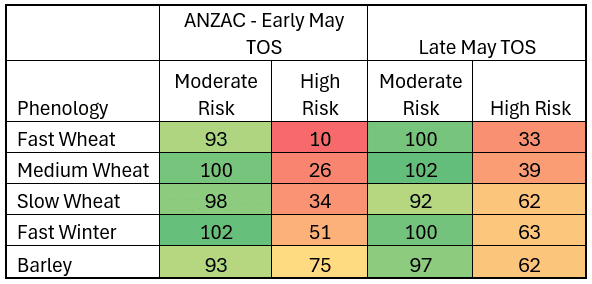
- In the three years of work conducted so far, moderate risk zones aren’t showing much penalty from delaying sowing. Indicating early sowing is getting some frost damage.
- Barley and fast winter wheats are the best options in high-risk zones but still with a large penalty.
- Sowing fast maturing wheats in the high-risk zones is almost always a disaster.
Table 2: Temperature data and hours below zero degrees Celsius recorded during critical flowering periods from the three different trial sites in the Tooligie area in 2025.
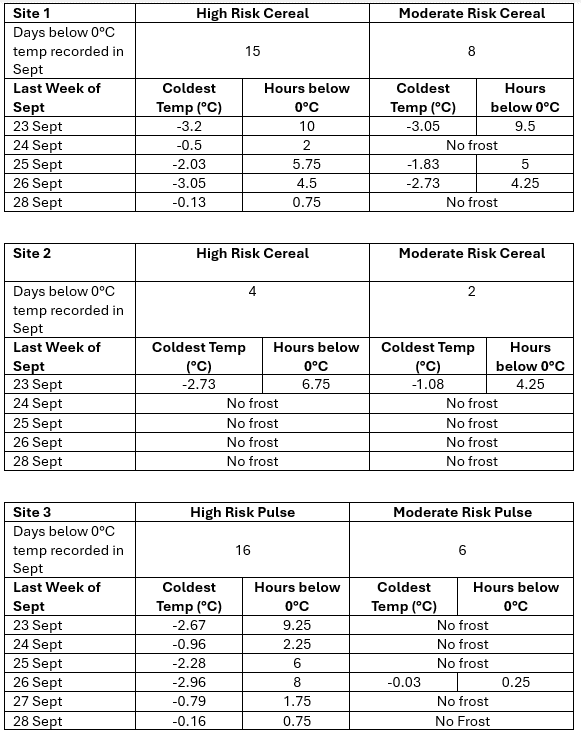
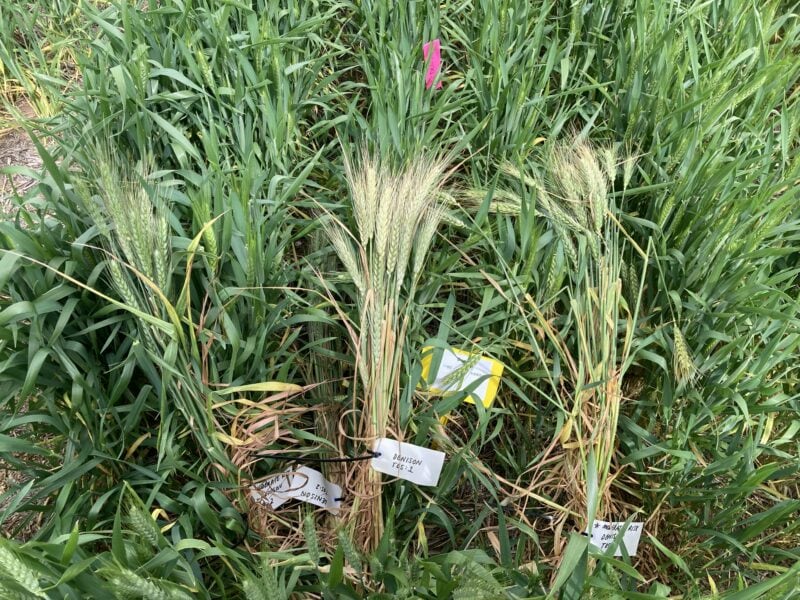
Above: Examples of the same variety sown at different times (with irrigation applied early in the season) and with different frost symptoms were provided as a comparison to the trial site plants. Mowhawk has been adopted by the host trial site farmer (and other local farmers) as a risk mitigation strategy in his ‘red zone’ paddocks.
Thanks to EPAG Research and the GRDC project ‘Further tactics to minimise frost damage on the Eyre Peninsula’ AIP2404-001RTX.