
Cool Ewes, More Lambs | Fertility bonus in reducing heat stress
Recent trials undertaken at the Davies Research Centre, University of Adelaide, has found heat events can lead to major consequences for Australian sheep producers.
Research has found ewe reproduction, fertility, health and welfare is compromised as temperatures climb during warmer months. In fact, each day in excess of 32°C during the week of mating, reduces the number of lambs born per 100 ewes mated by 3.5% (van Wettere et al. 2021).
The aim of the project, titled "Improving the climate resilience of the Australian Sheep Flock", was to determine the impact of supplementation using either melatonin implants (Regulin®) or a vitamin A,D & E (ADE) drench on the fertility of sheep across South Australia.
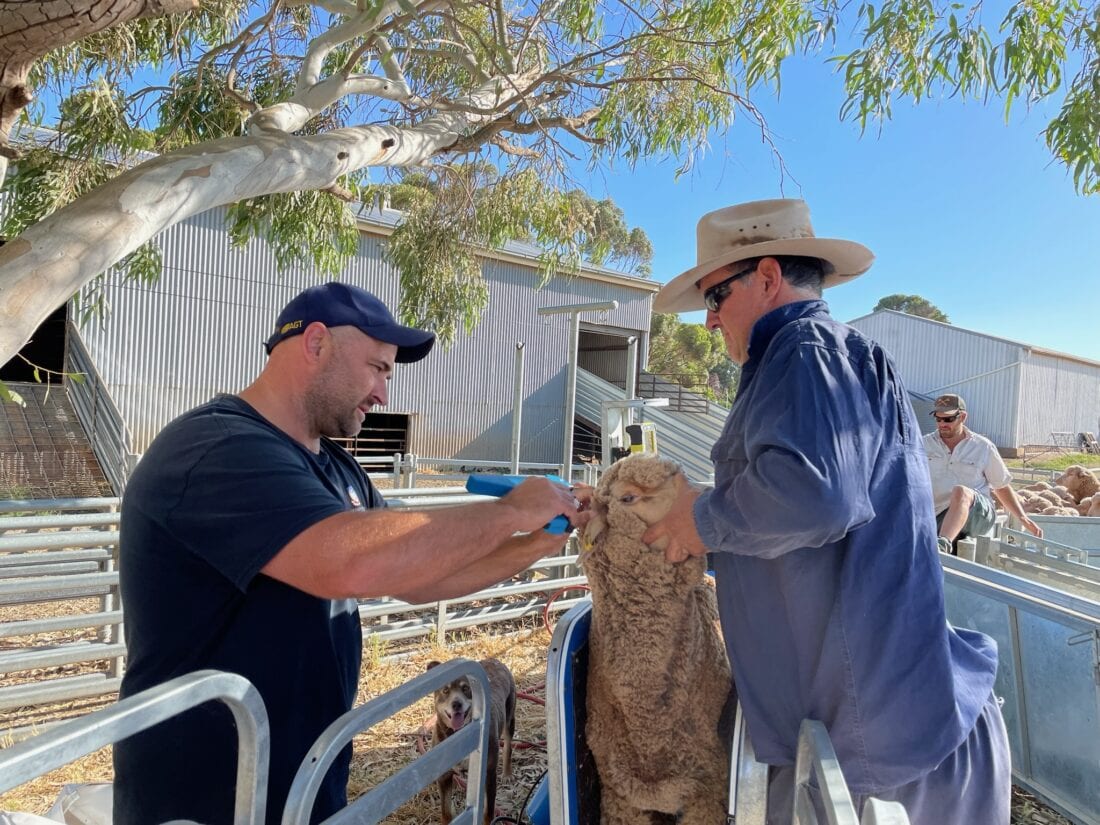
Image: Uni of Adelaide Project Lead (Intensive Livestock), William van Wettere, implanting melatonin at a trial site
KEY OUTCOMES
- On the Eyre Peninsula, Regulin® or ADE supplementation improved ewes bearing multiple fetuses and overall pregnancy scanning rates across two consecutive joining periods.
- Across all sites in South Australia, Regulin® showed the greatest improvement in ewe fertility, with a 16% and 7% increase in fetal number per ewe scanned across the two years.
RESULTS
Three trial sites were located in the Eyre Peninsula for this project - two based near Kyancutta and one based near Wudinna. The joining periods of the three properties were between December-January, with all properties running Merino sheep.
Regulin® increased pregnancy rates in both joining seasons and overall fetal number per ewe joined by 13 and 5% respectively.
Drenching with ADE increased pregnancy rates in the 2024/25 joining season but not the 2023/24 season; however, overall the fetal number per ewe joined increased in both, by 7 and 12% respectively.
The improvement seen in ewe fertility with the use of Regulin® during joining in summer months suggests its action as an antioxidant benefits ewe productivity and can improve economic return through greater lambs born.
Click here to view the full report for this project.
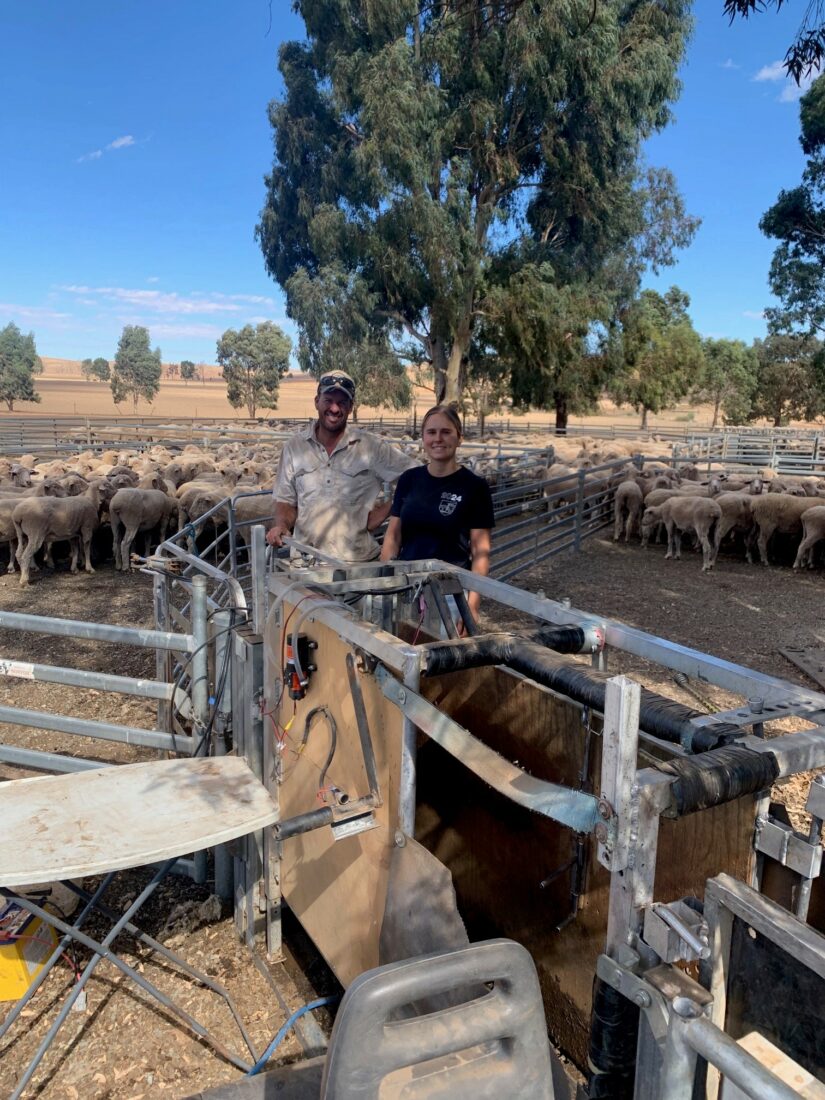
Image: Adelaide University researcher, Megan Tscharke, and trial participant, Tom Trengove, at pregnancy scanning.
