
De-risking the seeding program 2025 – Grass Weeds, Dry Starts and Herbicide Choices
Written by Zhaohan (Elijah) Luo1,2 and Amanda Cook1,2,3
1SARDI; 2Adelaide University; 3Flinders University
Dry sowing can be a useful strategy for getting large seeding programs underway on time, but it also brings some risk - particularly where grass weed seed banks are high and the season break is delayed.
In 2025, a demonstration site was established at Poochera to examine how a range of early season herbicide options performed in Calibre wheat under two different sowing times. The site was on a calcareous sandy loam with a high annual ryegrass burden, along with populations of brome and barley grass. The first time of sowing was 24 April (TOS1), into a dry soil profile. The second time of sowing was 16 June (TOS2), after opening rains.
The aim was to better understand how herbicide choice and sowing timing influenced early grass weed control, crop establishment, grain yield and protein. This trial was particularly relevant for growers managing large programs, where dry sowing is often an essential component of their seeding program.
Key messages
- Herbicide treatments did not affect plant establishment in 2025 at either TOS1 or TOS2.
- Ideally, dry sown paddocks should have low weed seed banks to reduce the risk of early grass weed pressure.
- All herbicides achieved some level of weed control in the high weed burden paddock compared to the untreated control and the early post emergent (EPE) herbicide treatment.
- Mateno Complete 1 L/ha IBS, and Trifluralin 1.8 L/ha + Avadex (a.i.500 g) 1.6 L/ha + Sakura 118 g/ha IBS treatments resulted in the lowest weed numbers with both sowing times, eleven weeks after time of sowing, however these were the most expensive herbicide packages tested.
- There was a grain yield decrease of 0.18 t/ha at TOS1, but timely sowing is a significant consideration for large seeding programs.
The Poochera demonstration used a split plot design with two times of sowing and eight herbicide treatments. The soil profile was dry before the first sowing, with gravimetric soil water content of 8-11% in the top 80 cm when measured on 11 June. Calibre wheat was sown at 75 kg/ha, with 75 kg/ha MAP banded below the seed. Sowing was completed using a Primary Sales split system with press wheels.
The two sowing times were:
- TOS1: 24 April 2025
- TOS2: 16 June 2025
Most herbicide treatments were applied immediately before sowing and incorporated by seeding. The exception was Mateno Complete, which was applied early post-emergent at the three-leaf stage, GS13.
Herbicide treatments and cost per hectare
- Untreated
- Sakura 118 g/ha IBS ($30/ha)
- Overwatch 1.25 L/ha IBS ($43/ha)
- Prosulfocarb 3 L/ha IBS ($24/ha)
- Mateno Complete 1 L/ha IBS ($53/ha)
- Mateno Complete 1 L/ha EPE (GS13) ($53/ha)
- Trifluralin 1.8 L/ha + Metribuzin 100 g/ha IBS ($19/ha)
- Trifluralin 1.8 L/ha + Avadex (a.i.500 g) 1.6 L/ha + Sakura 118 g/ha IBS ($61/ha)

Figure 1: Grass weed numbers early in the season for herbicide treatments at both times of sowing at Poochera in 2025. Mateno Complete EPE was applied on 11 July 2025 at GS13.
Grass weed pressure was high at the Poochera site, with an average of 195 grass weeds/m² recorded by 17 July. TOS1 had higher weed numbers than TOS2 at all assessment dates, suggesting the later-applied herbicides had better activity once the site received rainfall. Most incorporated-by-sowing herbicide treatments reduced grass weed numbers compared with the untreated control and the Mateno Complete early post-emergent treatment. The lowest weed numbers were recorded with:
- Mateno Complete 1 L/ha IBS
- Trifluralin 1.8 L/ha + Avadex 1.6 L/ha + Sakura 118 g/ha IBS
These were among the higher-cost herbicide packages tested, at $53/ha and $61/ha.
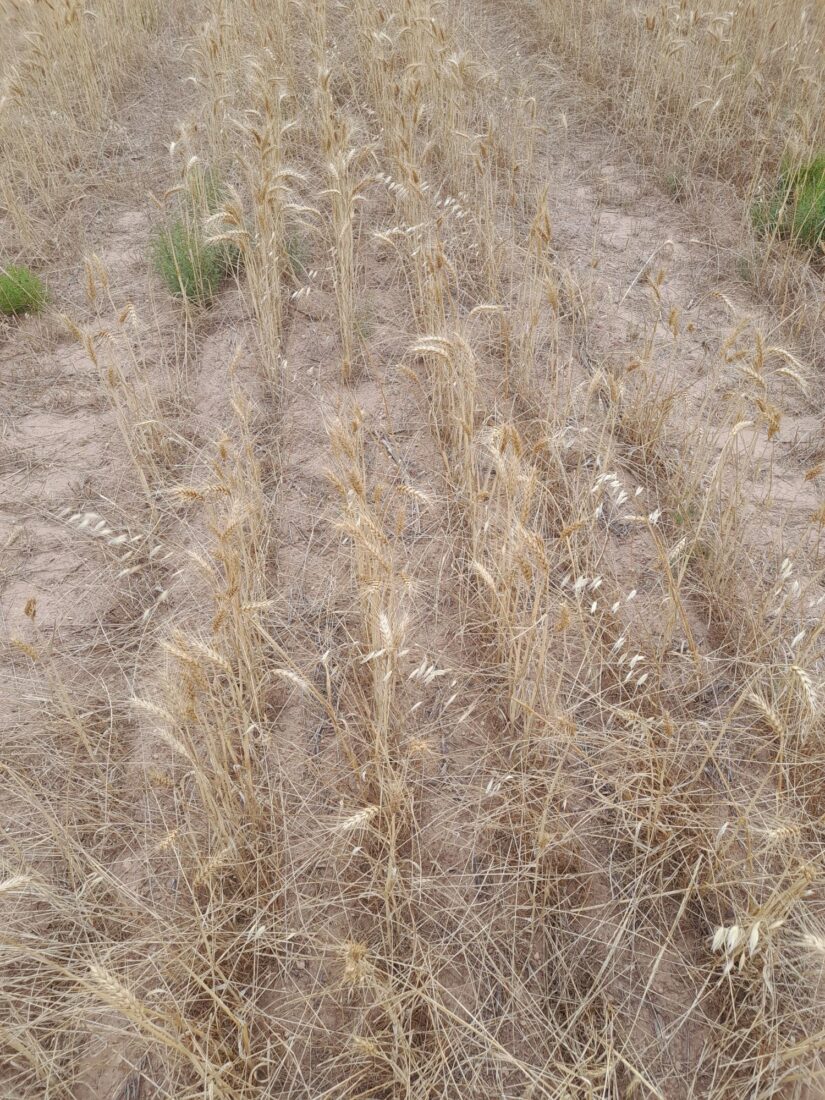
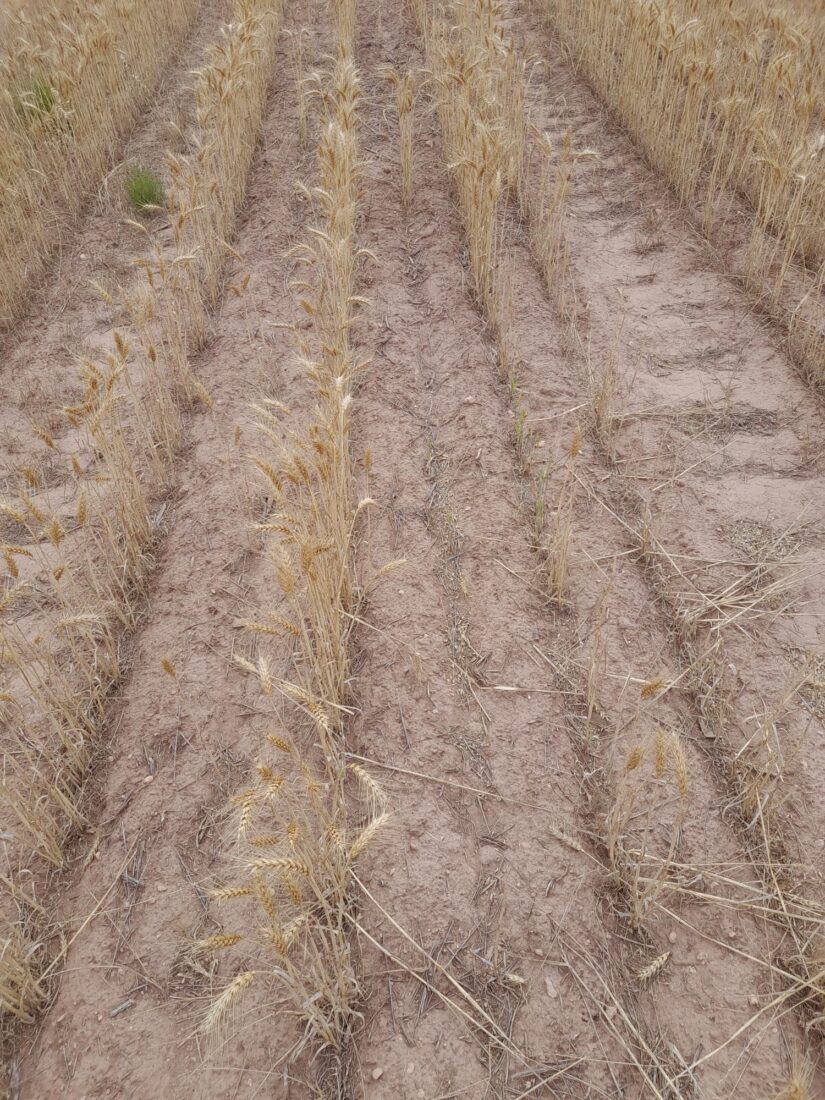
Grain yield was slightly lower from TOS1, averaging 0.9 t/ha, compared with 1.1 t/ha from TOS2. This resulted in a yield difference of around 0.18 t/ha. Across the herbicide treatments, the untreated control and Trifluralin + Metribuzin recorded the lowest yields. Overwatch IBS, Mateno Complete IBS and Mateno Complete EPE were among the higher-yielding treatments, although several treatments were not statistically different.
The results in 2025 highlighted the importance of paddock selection when dry sowing. Dry sowing helps growers manage large seeding programs, but it is best suited to paddocks with lower grass weed seed banks. Where weed pressure is high, early weed control becomes more challenging and herbicide choice is important. In this demonstration, most IBS options improved grass weed control compared with the untreated control, but the strongest options were the more expensive herbicide packages.

Table 1: Combined grain yield and protein of wheat in herbicide treatments from two different times of sowing at Poochera in 2025. Treatments followed by the same letter are not statistically different.
The full article will be available in the Eyre Peninsula Farming System Summary 2025.
You can read more about the 2025 Derisking the sowing program project on the AIR EP project page
Acknowledgement
This project ‘Derisking the sowing program on EP in 2025’ addresses the South Australian Drought Hub priority themes of Farm planning and decision making to manage climate and operational risk and Soil and land management strategies, technologies, and innovations. This project is supported by the South Australian Drought Resilience Adoption and Innovation Hub, through funding from the Australian Government’s Future Drought Fund, led by Agricultural Innovation & Research Eyre Peninsula (AIR EP) and delivered by SARDI.
Thank you to the grower for hosting the demonstration site, and to Kym Zeppel, Marina Mudge, Katrina Brands, Rebbecca Tomney and Cayley Gray for their assistance in completing field work.