Is your header ready?
It was hard to ignore the number of headers poking their noses through shed doors earlier this month – covers off, oil dropped, and some poor individual (that clearly drew the short straw) either up and under or flat out on a drop sheet, straight into the grease and grime.
Header fires remain one of the biggest factors in harvest fires, with research showing that approximately 7% of harvesters start a fire each year, and one in ten causing significant damage or loss to machinery and crop. The major cause of these fires is overheating, primarily from bearings, which is why pre-harvest header checks are so critical.
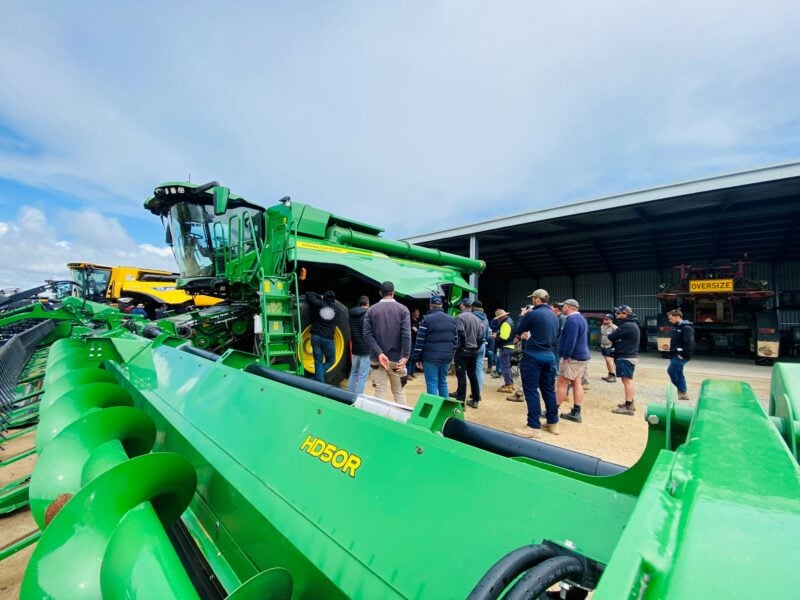
Kondinin Group research engineer Ben White presented at the 2024 EP GRDC Harvester workshops, encouraging growers to be vigilant in maintaining high levels of hygiene and maintenance of machinery throughout harvest.
Here are the following Top 10 Tips to improve harvester fire safety:
- Most harvester fires are caused by dust and trash build-up and bearing failures. Clean the machine down regularly, starting at the front then working in a top-down approach. A final blast of air over the exhaust system to dislodge any dust that may have been disturbed and settled during the clean down is recommended.
- Pulse crops are substantially more volatile than cereals so extra care and vigilance is required when harvesting these.
- Monitoring and logging bearing temperatures with an infra-red heat gun or thermal imager helps identify at-risk bearings so they can be replaced before failure.
- Recognise the big four factors that contribute to fires: relative humidity; ambient temperature; wind; and crop type and conditions. Abide by state-based grain harvesting codes of practice and declared harvest bans and observe the Grassland Fire Danger Index (GFDI) protocol on high fire risk days.
- Have at least the minimum required water and fire-fighting unit in the paddock being harvested.
- Having a pair of extinguishers (water and A/B/E) at the cab entry ladder and a pair at the rear of the machine closer to the engine means fire-fighting options are available when and where they are needed. A fire suppression system provides the best chance of extinguishing a fire on a harvester.
- Having a fire plan in place with the harvest team is imperative. Knowing who will do what and identifying communications channels to be used means everyone knows what to do. Having a listing of emergency numbers or uhf channels in the cab is essential.
- Harvesting highly volatile crops like lentils across the paddock into the prevailing wind gives operators a better chance of containing the fire as incendiaries are blown onto stubble, not standing crop.
- If operators do have a fire on board, pulling out of the crop immediately and facing the machine into the wind before attempting to fight it gives the operator the best chance of controlling the fire. Remember, harvesters are replaceable so prioritise personal safety.
- Research has shown static does not have enough energy for the ignition of even the most volatile crop residues. Be mindful that it can, however, contribute to significant dust/fuel loads on the machine.
In addition, GRDC has several resources and publications available for growers as they get harvest-ready:
- Reducing Harvester Fires: the Back Pocket Guide provides an easy-to-read harvester fire reduction checklist
- Harvester Setup Guide – optimising harvest losses with contributions from a range of third-party independent harvest optimisation experts based on their experiences. The guide covers measuring harvest losses, reducing header front losses, feeder house set-up, threshing system set-up, the cleaning area, harvest weed seed control and safety.
- For those of you harvesting lentils this season, the GRDC podcast Preventing harvester fires in lentils has relevant tips and information for growers (which is also applicable to all crop types).
For more information, visit the Harvest page on the GRDC Groundcover website.