Making the most of a solid hay season: Why feed testing & storage matter
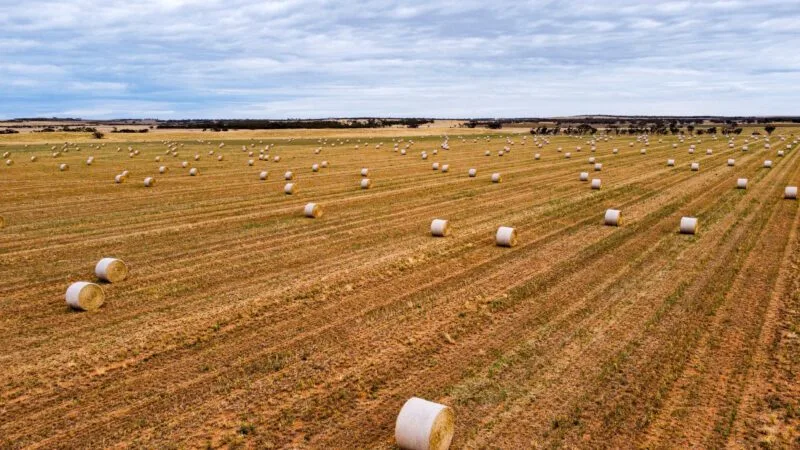
Following a favourable growing season across the Eyre Peninsula, significant areas of crop and pasture have been cut for hay, providing an opportunity for growers to build feed reserves, support livestock enterprises and build on-farm resilience in preparation for tough seasons ahead.
However, while hay yields may be high, the nutritional value of that hay can vary considerably. Crop type, maturity at cutting, weather conditions during curing and the time between cutting and baling can all influence feed quality.
With substantial quantities of hay being produced across the region, now is an ideal time to consider feed testing to understand exactly what is sitting in the haystack. Equally important is ensuring that hay is stored correctly to maintain its quality and minimise losses.
Not all hay is created equal
Previous research undertaken on the Eyre Peninsula through the Filling Feed Gaps – Hay vs Silage Production project, demonstrated considerable variation in feed quality between hay and silage samples.
The project, involving livestock consultant Tim Prance, analysed 35 hay and silage samples collected from across the Eyre Peninsula in December 2023. Results highlighted the relationship between fibre content, digestibility and metabolisable energy (ME), as well as the influence of cutting time and haymaking conditions.
Hay cut later in the season generally contained more stem and fibre, resulting in lower digestibility and energy content. However, the results also demonstrated that good-quality hay could be produced under challenging seasonal conditions when cutting and baling were well managed.
These findings reinforce the importance of testing rather than assuming feed quality based on crop type, appearance or seasonal conditions.
Hay that looks and smells good is not necessarily high-quality feed. While visual assessments can help identify issues such as mould, weather damage or excessive stem content, they provide limited information about the nutritional value available to livestock.
Understanding your feed test results
A feed test can provide valuable information about the nutritional composition of hay, helping you determine how suitable it is for your production requirements.
Some of the key measurements include:
- Metabolisable energy (ME): Measured in megajoules per kilogram of dry matter (MJ/kg DM), ME indicates the energy available to livestock for maintenance, growth, pregnancy and lactation.
- Crude protein (CP): Expressed as a percentage of dry matter, crude protein is important for rumen function, animal growth and milk production. Requirements vary depending on livestock class and production stage.
- Neutral detergent fibre (NDF): Provides an indication of total plant cell-wall fibre. Higher NDF levels are generally associated with reduced voluntary feed intake.
- Acid detergent fibre (ADF): Represents the less digestible fibre components. Higher ADF levels are generally associated with lower digestibility and energy availability.
- Dry matter (DM): Indicates the proportion of feed remaining after water is removed. This is important when comparing feeds on a consistent nutritional and cost basis.
- Mineral content: Testing for key minerals, including calcium, phosphorus, magnesium and sodium, can help identify nutritional imbalances that may need to be addressed through supplementation.
Together, these measurements help determine whether hay is suitable for maintaining dry stock, supporting pregnant or lactating ewes, or meeting the higher nutritional requirements of growing lambs.
SheepConnect SA highlights the importance of considering both energy concentration and fibre content when assessing feed quality. For example, hay containing 10.5 MJ ME/kg DM, 12% crude protein and 50% NDF can support substantially greater energy intake than hay containing 8.5 MJ ME/kg DM, 7% crude protein and 65% NDF. Higher fibre levels can restrict intake, further reducing the amount of energy available to livestock.
Turning feed test results into better decisions
Knowing the nutritional value of hay allows growers to make more informed decisions about how and when to use their feed reserves.
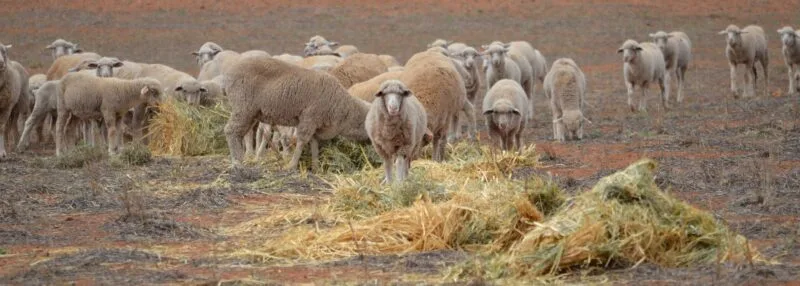
For livestock producers, this can help identify which hay should be allocated to different classes of stock, whether additional grain or protein supplementation is required, and how stored feed can be incorporated into a feed budget.
For example, hay with lower energy and protein levels may be suitable for some maintenance feeding situations but may not meet the requirements of late-pregnant ewes or rapidly growing lambs without additional supplementation.
Feed testing also provides an opportunity to compare the value of different feed sources. A cheaper bale is not necessarily better value if its energy content is significantly lower.
Comparing feed on a cost per tonne of dry matter or cost per unit of metabolisable energy provides a more meaningful assessment than comparing bale prices alone.
For growers selling hay, feed test results can also provide potential buyers with greater confidence in the product and help support discussions around its suitability and value.
Protecting feed quality after baling: Storage and stacking matter
Producing good-quality hay is only part of the process. Correct storage and stacking are essential to maintaining nutritional value, minimising wastage and reducing the risk of haystack fire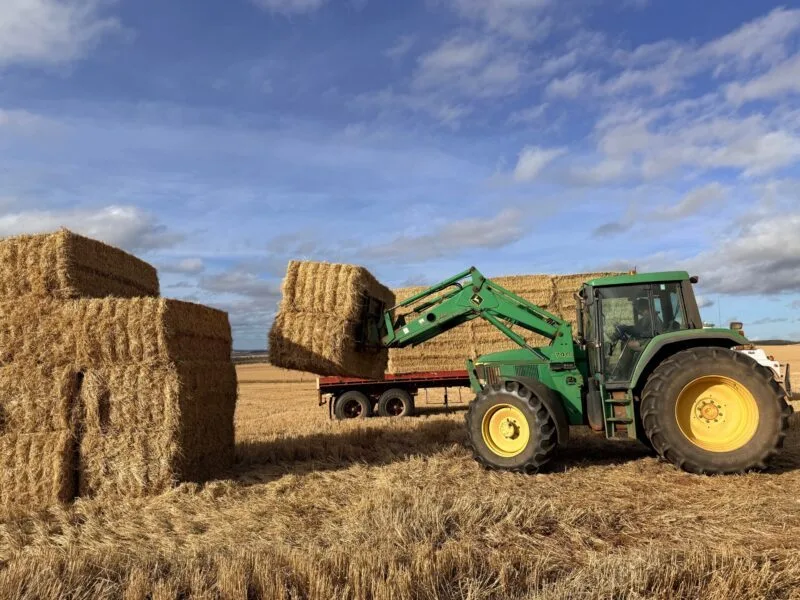 s.
Hay exposed to moisture during storage can experience mould growth, dry matter losses and declining feed quality. MLA identifies uncovered storage as having the greatest potential for weathering losses, particularly where moisture accumulates at the base of bales.
Where possible, hay should be stored undercover in a well-drained location. For outdoor storage, selecting elevated, well-drained ground and protecting bales from rain and ground moisture can help reduce deterioration.
The following practices are worth considering when storing hay:
- Keep hay dry: Ensure hay is adequately cured before baling and protect stored bales from rainfall, runoff and leaking roofs.
- Select suitable stacking sites: Choose well-drained locations and avoid areas where water can accumulate beneath or around bales.
- Allow adequate airflow: Follow appropriate stack design and spacing recommendations to assist ventilation and safe storage.
- Separate hay lots: Keep hay from different paddocks, cutting dates or quality grades identifiable to support feed allocation and future testing.
- Manage fire risk: Locate haystacks away from buildings, machinery, powerlines and other ignition sources, and maintain appropriate fuel breaks.
- Monitor stored hay: Regularly check haystacks for heating, particularly during the weeks and months following baling.
Understanding the risk of haystack heating
The SA Country Fire Service warns that hay baled with excessive moisture can undergo biological and chemical reactions that generate heat within the bale. This heating can reduce dry matter,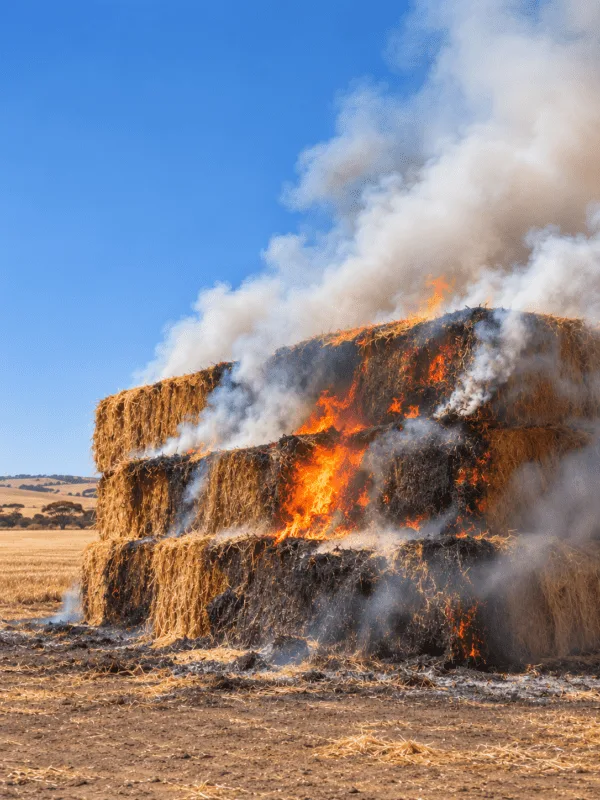 nutritional value and palatability. In severe cases, temperatures can increase to the point of spontaneous combustion.
The CFS advises that spontaneous ignition can occur within two weeks of baling, with the risk potentially remaining for more than three months. Warning signs include steam rising from stacks, condensation beneath shed roofing, mould growth, unusual musty or caramel-like smells, and sections of the stack slumping.
Growers should regularly monitor stored hay using an appropriate temperature probe, following CFS safety guidance. If temperatures are approaching or exceeding 70°C, or smoke is detected, call 000 immediately and seek CFS assistance. Disturbing a severely heated stack can introduce oxygen and trigger ignition.
With substantial hay reserves being stored across the Eyre Peninsula this season, good storage practices, regular monitoring and feed testing will all play an important role in preserving feed quality and protecting valuable fodder supplies.
Getting a representative sample is critical
The accuracy of a feed test depends on the quality of the sample submitted.
Hay quality can vary between paddocks, crop types, cutting dates and even within individual bales. A small handful collected from the outside of a bale is unlikely to represent the overall feed quality.
Using a hay corer allows samples to be collected from within multiple bales, providing a more representative assessment of the hay lot.
MLA's Prograze guidance recommends randomly sampling 5–10 large round or square bales from each representative hay lot, collecting cores at different heights and combining them into a composite sample.
Ideally, hay from different paddocks, crop types or cutting periods should be sampled and tested separately, particularly where there are likely to be differences in nutritional quality.
Once results are available, growers can work with their livestock advisor or nutritionist to interpret the findings and develop an appropriate feeding strategy.
If hay has experienced significant moisture damage or deterioration during storage, retesting may be worthwhile before feeding, particularly for livestock with higher nutritional requirements. Suspected mould or mycotoxin contamination may require additional investigation beyond a standard nutritional feed test.
AIR EP hay corer available for loan
To make feed sampling easier, AIR EP has a drill-operated hay corer available for growers to borrow.
The corer allows samples to be collected from multiple bales quickly and consistently, helping growers obtain a representative sample for laboratory analysis.
With large quantities of hay being produced across the Eyre Peninsula this season, feed testing and appropriate storage are practical steps towards understanding and protecting the value of stored fodder.
To arrange a loan of the AIR EP hay corer, contact Naomi at AIR EP on 0428 540 670 or Livestock Coordinator Hannah Gordon on 0408 311 122.
Taking the time to test hay now, and ensuring it is stored correctly, can help reduce uncertainty around feed quality and support more confident livestock feeding decisions in the months ahead.
Further information and resources
AIR EP – Filling Feed Gaps: Hay vs Silage Production for the Eyre Peninsula by Tim Prance, T Prance Rural Consulting (2024). Research examining feed quality, cutting time, fibre content and digestibility in Eyre Peninsula hay and silage samples. Supported by the Australian Government's Future Drought Fund through the SA Drought Hub.
SheepConnect SA – Hay Quality and Fodder Quality Information on hay quality, nutritional requirements and the relationship between energy, protein, fibre and livestock intake.
- https://www.sheepconnectsa.com.au/management/nutrition/hay-quality
- https://www.sheepconnectsa.com.au/stock-journal-articles/fodder-quality
Meat & Livestock Australia – Prograze Guidance on feed testing, representative sampling and using feed quality results to inform livestock nutrition.
Meat & Livestock Australia – Hay Storage and Processing Technical information on hay storage, weathering losses, drainage and stacking considerations.
Feed Central – Download and play Hay Matters podcasts for topical seasonal hay and fodder updates
- https://podcasts.apple.com/au/podcast/hay-matters/id1733361817
South Australian Country Fire Service – Farm Fire Safety and Prevention Guidance on haystack heating, spontaneous combustion, warning signs and safe storage practices.
This activity is supported by the Eyre Peninsula Landscape Board with funding from South Australian Government’s Landscape Priorities Fund.