
PIRSA Locust program update
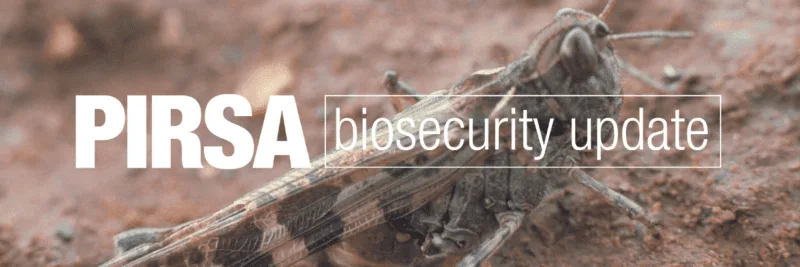
Following several months of intensive surveillance and control activities across affected parts of the state, the Department of Primary Industries and Regions (PIRSA) is transitioning its locust response to the next phase, shifting from control activities to monitoring and assessment of ongoing locust activity.
While active surveillance and control activities in the Flinders and Mid North region will cease by 20 November 2026, PIRSA will continue to oversee the locust situation in this region until at least 16 December 2026 through ongoing monitoring and follow up of landholder reports.
- Surveillance has been undertaken across more than 5.4 million hectares, with targeted control operations treating close to 123,486 hectares of high-density locust populations.
- PIRSA has treated 102,363 ha in the Flinders and Mid North since the locust response commenced.
- Australian Plague Locust Commission (APLC) has treated 21,123 ha, comprising 19,819 ha in the Flinders Mid-North and 1,304 ha in the Murray Mallee.
Locust activity has not disappeared. Remaining populations are primarily adult locusts, which are mobile and capable of travelling significant distances on favourable winds. As a result, localised outbreaks, swarm pockets and sightings may continue across parts of South Australia over coming weeks.
PIRSA will also continue to monitor locust activity more broadly across South Australia, including in the Riverland, Mallee, Yorke Peninsula and Upper Eyre Peninsula. Ongoing surveillance and reporting by the broader community will help track locust populations and support advice to landholders and industry where required.
The APLC will also continue to monitor locust populations and assess any evidence of successful second-generation breeding.
Landholders continue to be encouraged to:
- Monitor and report all significant locust activity.
- Treat locusts where possible. Find out more about treatment and control options.
- Take advantage of support available through the Locust Chemical Rebate Scheme where eligible.
To support landholders, PIRSA has expanded its online locust control resources, including additional chemical treatment advice, to help inform treatment and control decisions.
If you see locust activity, report it to PIRSA by calling the Exotic Plant Pest Hotline on 1800 084 881 or through PIRSA’s online plant pest reporting form.