Event Recap | Practical pasture conversations at Whites Flat
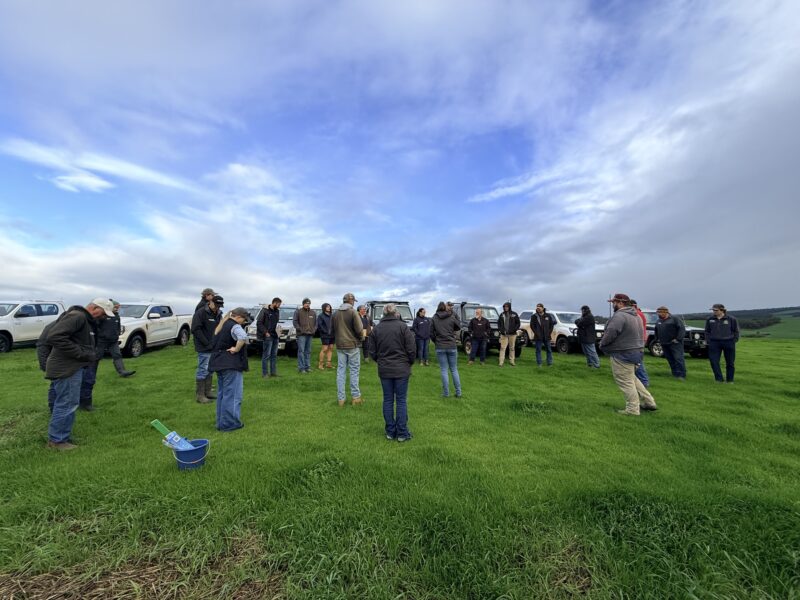
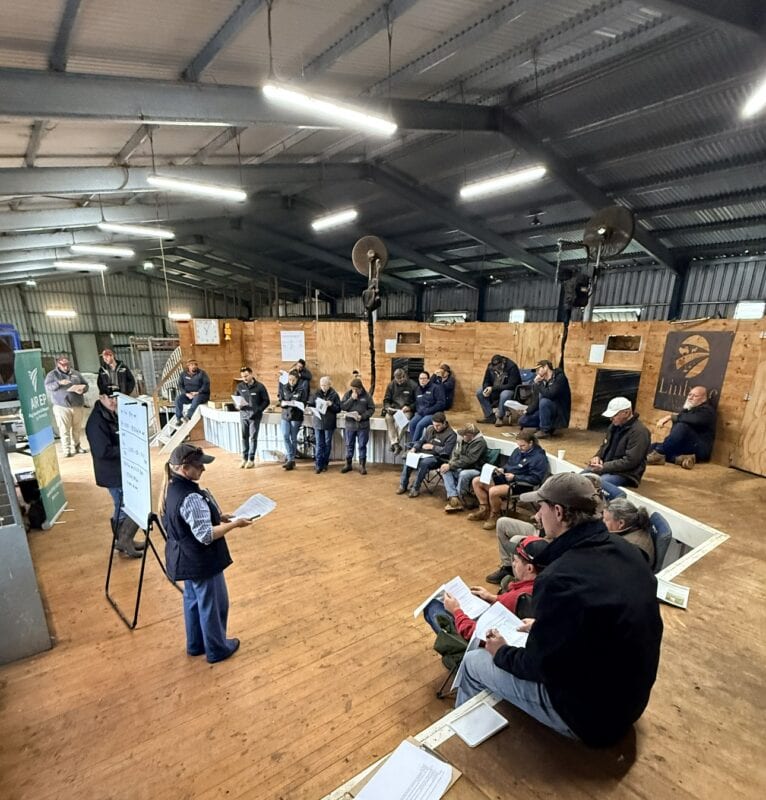
AIR EP’s recent Pastures ‘Walk n Talk’ session at Whites Flat brought producers, advisers and industry representatives together for a practical paddock-based discussion on pasture management, feed on offer, stocking rates, livestock nutrition, weed management and emerging technologies.
Hosted by David and Rhianne Low, the morning gave participants a chance to hear and see how the family have refined their system over several years to increase their stocking rate and match pasture production with livestock demand.
Reflecting on recent dry seasons and late starts, Rhianne emphasised the importance of understanding your livestock system well enough to plan in advance to be adaptable to variable seasonal and market conditions. She explained that their focus was to manage expenses without compromising the system or productivity.
“Forecasting is so critical. We base our budgets on a decile five season and focus on improving the ‘one percenter’s’, rather than chasing rainbows”, she said.
Building the livestock enterprise
In recognising the profit drivers within their business, the Low family made several changes and improvements to streamline their production system.
“We realised that at the scale of our cropping business, the cost of machinery replacement was not sustainable. We then decided it was better to focus on livestock”, shared David and Rhianne.
Changes to the system so far include:
- Split larger areas into smaller, 20ha paddocks
- Reduced cropping paddocks to focus on pasture production
- Established perennial pastures including lucerne, kikuyu, clover and medics, in both arable and non-arable areas
- Changed time of lambing to better align with feed availability, lifting carrying capacity from around 3–4 DSE to 10–11 DSE
- Aim to finish young stock as quickly as possible to preserve pastures for ewes
- Change their marketing focus to producing quality store lambs which allowed them to run more ewes
- Rely less on trading sheep, to mitigate biosecurity risks
David shared his long term plan to undertake further drone spreading of pasture seeds across more non-arable hills country, and future investment in containment feeding to preserve pastures and ground cover, whilst maintaining ewe health in dry seasons and reducing labour costs associated with supplementary feeding.
Key Messages
- Feed on offer is a practical decision-making tool for stocking rates, feed budgeting and livestock management.
- Matching stocking rate to pasture growth helps improve feed utilisation, assists in business planning.
- Pasture density and grazing management are just as important as species choice.
- Kikuyu can help fill feed gaps when used strategically.
- Weed control remains a challenge, particularly in non-arable areas and mixed pasture systems.
- Containment feeding, feed budgeting and grain storage are important tools for preparing for dry seasons.
- Drone technology may offer future opportunities for seeding, spreading and spraying in difficult-to-access areas.
What participants want to know more about
Participant feedback showed strong interest in practical, whole-farm decision-making. Producers wanted more information on pasture species for different soil types, including acid and wet country, mixed pasture performance, and feed on offer curves for Lower Eyre Peninsula pasture types.
There was also strong demand for more support with feed budgeting, whole-year stocking rate calculations, containment feeding, livestock health planning and feed demand for weaned lambs.
Coming up
AIR EP is encouraging producers to register their interest in the ‘RAMping Up Repro’ workshops currently advertised on the AIR EP website. Developed by Australian Wool Innovation (AWI) and Zoetis Australia, the workshops focus on practical skills to improve ram health, longevity and reproductive performance, including pre-joining ram inspections, condition scoring, nutrition, animal health, disease and biosecurity considerations.
Registrations of interest close COB Wednesday 1 July.
Thank you
AIR EP sincerely thanks David and Rhianne Low for hosting the session and for generously sharing their time, experience and business insights. And to Nutrien staff Richard Norris, Mackenzie Best and Daniel Schuppan for their technical insights.
Thank you also to the producers, advisers and industry representatives who attended and contributed to the discussion. The questions, comments and feedback from the day will help guide future livestock and pasture extension activities across the Lower Eyre Peninsula.
Acknowledgement
This event was supported by the Eyre Peninsula Landscape Board, with funding from the South Australian Government’s Landscape Priorities Fund.