RiskWi$e: Big upside, but which paddocks can still turn it into profit?
By Andrew Ware, EPAG Research
After a strong start to the season, yield potential across many EP paddocks is sitting well above what growers may have budgeted for at sowing. While some growers may have already parked the spreader in the shed, it is still useful to ask where yield potential is still realistic, where extra N is likely to buy grain rather than just biomass, and where frost or heat risk may limit how hard to chase the season.
There is a good reason this season feels different. Yield Prophet runs for Cockaleechie, Lock, Minnipa and Cootra all show strong stored moisture and much higher upside than a more typical start would suggest. In most of these examples, the water-limited yield potential remains well above the current nitrogen-limited yield. That tells us the season is still carrying real production opportunity.
But high yield potential is not the same as banked yield. From here, the question is less “how good could this be?” and more “which paddocks are still set up to convert that potential into grain?”
That question matters because cereals set much of their yield potential during the critical period from flag leaf emergence through to flowering, when grain number is being determined. Recent GRDC-supported crop physiology work has reinforced that crops are best placed to capture high yield potential when they reach this period with the right flowering window, enough canopy to intercept light, enough water, and enough nitrogen to keep growing strongly.
In practical terms, the next few weeks are about getting crops to jump through the right hoops: water, canopy, N supply and flowering risk.
What the focus paddocks are telling us
The four Yield Prophet examples show how different the same “good season” can look across the EP.
At Cockaleechie, the barley crop is already moving quickly. It had around 3.0 t/ha of dry matter on 30 June, 117 mm of PAW and is predicted to flower around mid-August. That is a big canopy with excellent water underneath it. The immediate question is whether there is enough N in front of the crop to carry that yield potential through stem elongation and grain set. Frost risk is not extreme, but it is still present, with a 27% probability of mild frost during flowering in the simulation.
At Lock, the Tomahawk wheat crop is less advanced, with median flowering around 3 September. It has strong PAW for the environment, but the gap between nitrogen-limited and water-limited yield is more obvious. That makes extra N attractive on responsive paddocks. The catch is that the modelled mild flowering frost risk is 42%, so the best candidates for extra N are not just the wettest paddocks, but the ones with acceptable flowering and landscape risk.
At Minnipa, the early-sown Wedgetail winter wheat shows how unusual the season is for Upper EP. The profile is very wet, with 132 mm total soil PAW and 110 mm available to current roots. But current crop-available N is only 28 kg/ha and the model shows the clearest N constraint of the examples. The crop is predicted to flower later, around 23 September, which lowers frost risk but increases heat risk during grain fill.
At Cootra, the contrast is very useful. Scepter spring wheat sown on 1 May also has a full profile, with 133 mm total PAW and 115 mm available to current roots. However, it has only built about 1.1 t/ha dry matter by 30 June and is predicted to flower around 2 September. The modelled frost risk is much higher than Minnipa, with 91% probability of mild frost and 50% probability of moderate frost during flowering and early grain fill. This is a good reminder that on Upper EP, the decision is not simply “do we have water?” It is also “what flowering window have we created?”
The rain forecast helps, but it does not remove the decision
The latest 8-day BOM rainfall map is encouraging for EP, with widespread forecast rainfall across the region. If that rainfall arrives, it may help move recently applied N into the root zone and keep crop demand rising. For growers who can still source and spread product in time, it may also provide an application opportunity. For others, it should be treated as a prompt to reassess paddock priorities and be ready for the next suitable rainfall window.
That said, one wet forecast does not lock in the spring. The broader BOM outlook still points to below-average July to September rainfall being more likely across much of southern Australia, with warmer-than-average days likely across most of the country south of the tropics. So this is not a signal to chase every paddock equally. It is a signal to reassess which paddocks now have enough water, crop potential and timing to justify more investment.
One of the harder things to judge this year is how much “bonus N” might become available through mineralisation. Moist soils, mild conditions and good crop growth can increase microbial activity and make more soil N available than growers may have budgeted for at sowing. That is useful, and while it is far from perfect, Yield Prophet is already allowing for some mineralisation in its N budgets. But it can also be distracting if it leads us to assume that mineralisation will fill every N gap. The key question is not “will I get some extra N?” — in many paddocks the answer is probably yes. The better question is “will that N arrive in the right place and at the right time to support canopy growth and grain number through stem elongation and the critical period?” Where crop demand is already running ahead of supply, relying too heavily on mineralisation may mean the crop quietly gives away yield potential before the deficiency is obvious.
The other practical constraint is that N decisions are rarely instant. Even if the forecast looks favourable, it takes time to source urea, organise freight, get product on farm and spread it. For some growers, the best opportunity to apply ahead of this rain may already have passed. That does not make the decision irrelevant, but it changes the way to think about it. Forecast rain should be treated as a decision checkpoint, not just an application window. If this rain falls, it will help confirm which paddocks still have strong water supply, which crops are accelerating, and where N demand is likely to rise quickly. The useful action may be to rank paddocks now, check supply options, line up spreading capacity and decide which paddocks are first in the queue if another rainfall opportunity appears. In a tight season for cash flow and logistics, being ready for the next suitable window may be more realistic than trying to react to every forecast event.
A way to sort paddocks without perfect soil test data
Soil testing is still the best way to quantify N supply, but many decisions now need to be made without perfect information. In that case, it may help to sort paddocks into three broad groups.
Green-light paddocks are the ones most likely to give a grain response to extra N. They have good, stored water or have clearly benefited from recent rainfall; good establishment and tiller number; no major soil constraint holding them back; a realistic flowering window; and a history that suggests N could be limiting. These might include cereal-on-cereal paddocks, paddocks with low fertiliser history, high biomass crops that are starting to pale, sandy soils with leaching risk, or paddocks where an N-rich strip is visibly greener.
Amber paddocks have some upside, but also a clear question mark. They might have good water but high frost exposure, strong crop growth but uncertain rooting depth, good colour but low yield history, or a flowering date that puts them near the edge of the safe window. These paddocks may still justify N, but the rate and timing should be more cautious. A split application, smaller top-up, or waiting for the next forecast update may be more sensible than trying to fully feed a decile 8 finish.
Red-light paddocks are where extra N is more likely to buy risk than grain. These include thin or patchy crops, paddocks with known soil constraints, shallow profiles that are unlikely to finish, frost-prone flats with early flowering crops, or late crops already likely to face heat during grain fill. In these cases, extra N may still lift protein or hay value, but the chance of converting it into profitable grain yield is lower.
A simple rule is: do not just ask whether the season has upside; ask whether that paddock can still use it.
Some practical N checks
Where soil test data is missing, a few simple checks can still improve the decision.
A paddock with a full moisture profile, strong biomass and a history of low N supply is more likely to be responsive than a paddock following a pulse, pasture or high-N history. A crop that is pale compared with similar paddocks may be short of N, although colour alone can be misleading where waterlogging, disease, sulphur or root constraints are also present. An N-rich strip remains one of the cheapest ways to test whether the crop is starting to run short. If the strip is clearly greener or more vigorous 10–14 days after rain, N is likely to be limiting.
For quick budgeting, remember that 100 kg/ha of urea supplies about 46 kg/ha of N. The crop will not recover all of that in the year of application, especially if conditions turn dry, but it gives a useful scale. If the extra yield needed to pay for the urea is small and the paddock is in the green-light category, the investment becomes easier to justify. If the paddock needs an exceptional finish just to break even, it belongs in the amber or red-light group.
A useful calculation is:
Break-even grain response = fertiliser cost per ha plus spreading cost, divided by grain price.
For example, 100 kg/ha of urea at $900/t costs $90/ha before spreading. At $400/t grain, that needs around 0.23 t/ha of extra grain to cover product cost alone. At $1,200/t urea, the same application needs around 0.30 t/ha. This does not make the decision for growers, but it helps separate paddocks where a response is realistic from paddocks where the economics rely on everything going right.
Urea price has changed the conversation, but not removed the risk
Recent falls in urea prices have changed the tone of the N discussion. Earlier in the season, the concern was not only price but whether product would be available at all. That risk appears to have eased, with fertiliser shipments beginning to move again through Hormuz and additional Australian supply secured from Brunei. However, global logistics are still not fully back to normal, and local price and availability will still vary.
For growers with tight cash flow, this argues for targeting rather than blanket spending. The best investment is likely to be the paddock where water, crop status, N demand and flowering risk all line up. The weakest investment is likely to be the paddock where extra N only creates more biomass without a reliable path to grain.
Frost and heat still need to be part of the N decision
Frost risk has not disappeared just because the season is wet or the broader outlook is warmer. The Yield Prophet runs show that flowering risk is very paddock and variety specific. Cockaleechie barley is earlier and has a modest frost risk. Lock has stronger frost exposure around early September flowering. Cootra shows how a spring wheat on Upper EP can carry a very high frost probability around flowering. Minnipa, by contrast, has lower frost risk because flowering is later, but much higher heat risk during grain fill.
That means flowering date should be treated as a paddock issue, not just a district issue. Extra N on a frost-prone flat may still be a poor investment, even in a high-potential year. Extra N on a better-drained, less frost-prone paddock with the same soil water may be a much better bet. On later-flowering crops, the question shifts from frost to heat and finish risk.
The take-home
This is a season with real upside, and the coming rain may help keep that upside alive. But the best chance of converting potential into profit will not be spread equally across every paddock.
The best hectares to back are the ones that have strong water supply, a crop already on track for good light interception by flag leaf, a realistic flowering window, and signs that N is the next limiting factor. The paddocks to be more cautious with are those where frost, heat, soil constraints or poor establishment mean the extra N has a lower chance of becoming grain.
The season has opened the door. The next few weeks are about deciding which paddocks are still in the best position to walk through it.
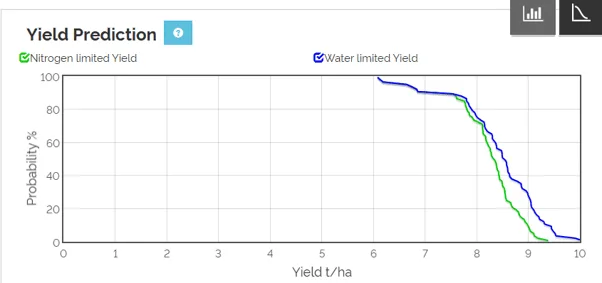
Figure 1. Cockaleechie Yield Prophet output – spring barley.
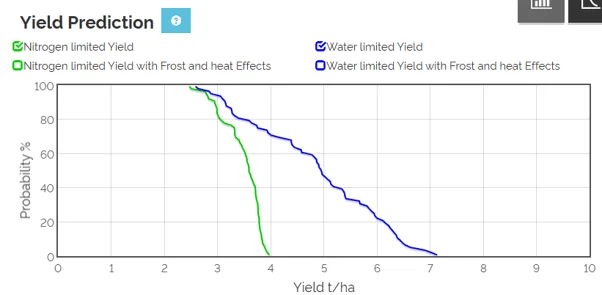
Figure 2. Lock Yield Prophet output – spring wheat.
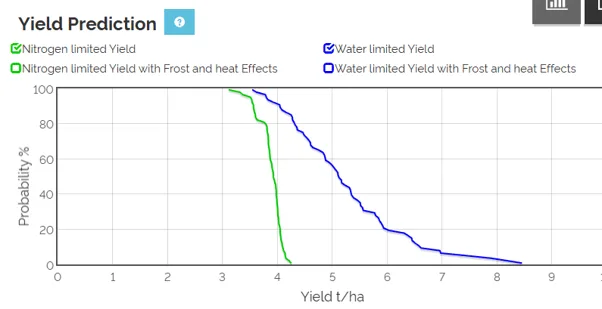
Figure 3. Minnipa Yield Prophet output – winter wheat.
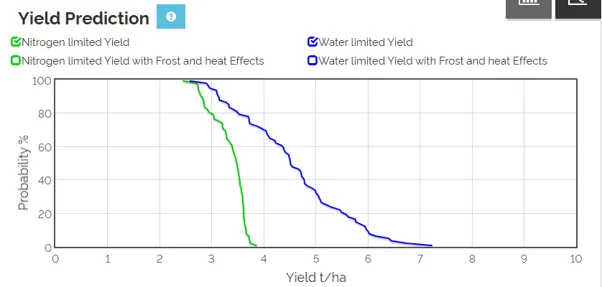
Figure 4. Cootra Yield Prophet output – spring wheat.
Prepared 30 June 2026.
Check out the full Yield Prophet reports from 22 June 2026 and the latest farmer podcasts on AIR EP’s RiskWi$e project page.