2026 Lower EP Crop Walk Recap| With bumper crops comes big decisions ahead
You cannot deny the impact of a solid rainfall season – it certainly brings a crowd!
For anyone standing 5ft 4 or less (guilty), they get the added bonus of reliving their youth and playing a little ‘hide n seek’ in the crop this season. Call me immature, but you can’t argue that it’s pretty fun being lost in a tall crop.
But crop height aside, there are also some major farming system considerations that come with hungry crops and big yields.
That was the sentiment from farmers at the 2026 AIR EP Lower EP Crop Walk, held on 8 September across sites at Edillilie and Cummins.
Approximately 75 individuals joined across the day which saw farmers, advisers, researchers, industry representatives and sponsors come together to hear current research updates and, importantly, test it against the practical realities of farming on the Lower Eyre Peninsula.
From nitrogen and lime, to lentils, fungicides and herbicides, the questions from farmers showed that attention is already shifting beyond this season. People wanted to know not only what worked, but what it might cost, how reliable it is, and how today’s decisions could affect rotations in 2027 and beyond.
Nitrogen: where does it go, and are we getting value?
At the GRDC Farming Systems Trial, Andrew Ware, EPAG Research and Matt Knowling, Adelaide University prompted plenty of discussion around crop rotations, nitrogen strategies and the economic impacts of the systems tested.
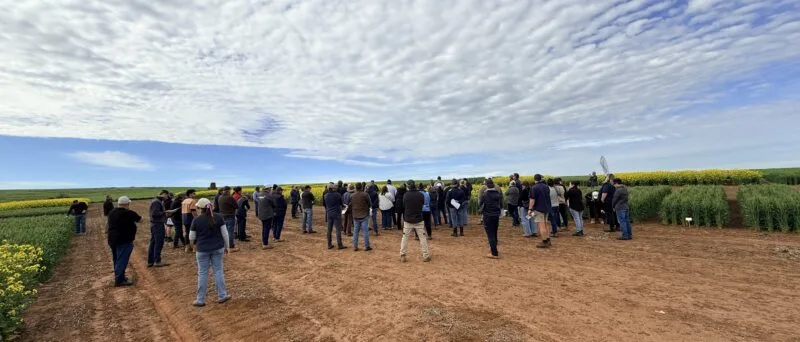
Farmers wanted to know how sensitive the trial results were to urea prices, whether nitrogen leaching was being measured, how nitrogen-use efficiency differed between wheat and canola in wetter seasons, and whether phosphorus levels were also being monitored.
One discussion point that caught the attention of many, was that nitrogen applied to wheat had not appeared as strong an investment as nitrogen applied to canola, even in lower-rainfall years. From there, the conversation broadened into legume nitrogen exports, mineralisation and how much nitrogen might genuinely remain available to the following crop.
Which led many to ask, “how do we actually capture nitrogen and know where it has gone?”
That is likely to remain a focus as work considers rotations such as legume–canola–wheat, alongside soil organic matter, carbon and soil biology.
Lime: looking beneath the surface
At the Natural Heritage Trust funded Innovative Soil Technologies liming site at Edillilie, Josh Telfer, SARDI showcased approaches to addressing soil acidity in the lentil phase, including micronised lime intended to reach the subsurface.
Despite the trial only being limed prior to sowing in 2026, there were already differences showing in lentil vigour, biomass production and nodulation.
Questions from the group quickly moved to application, with several wanting to know “what should growers consider when incorporating lime, what does the experimental product cost, and could symptoms that look like waterlogging actually be related to soil pH?”
The results at the lentil site were encouraging for many with similar soil types in the region, with one participant describing the liming demonstration as “encouraging them to be more proactive in this area”.
Lentils: soil constraints, varieties and disease management
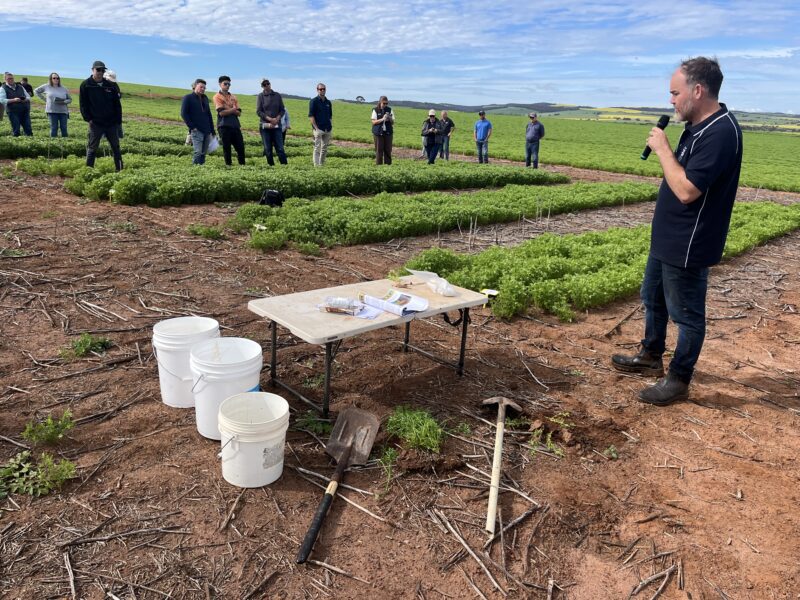
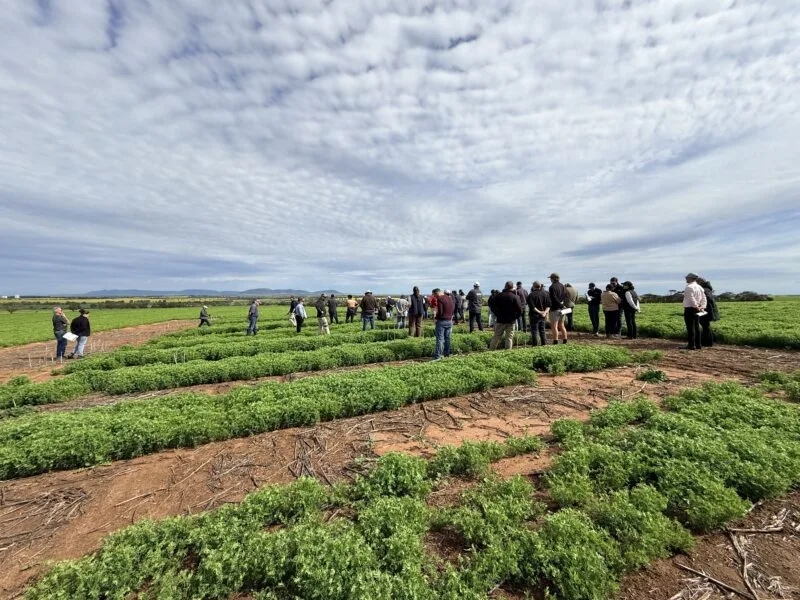
Brett Masters, EPAG Research provided an overview of lentils grown on ripped soil as part of the GRDC Legume Extension project, raising plenty of interest in how growers can identify dispersive clay layers and the immediate effects of soil amelioration and the results from different methods of amelioration.
At the site, Jason Brand, GEM Agronomy led a lentil variety and agronomy discussion, with farmers and advisors keen to discuss Group B herbicide-resistant varieties, new varieties coming onto the market, and potential yield improvements.
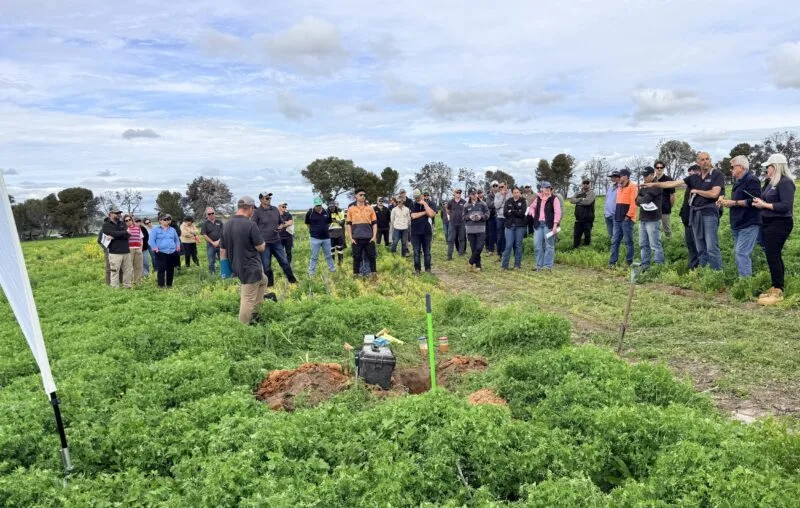
Disease management was also front of mind for many given the wet season, with fungicide timing, product choice, resistance management and the longer-term implications of fungicide use in legumes all generating questions from the audience.
Fungicides and weeds: protecting chemistry for the future
Andrew Ware, EPAG Research returned to the microphone to provide an update on the Blackleg in canola research being undertaken on EP, and strategies for farmers and advisors. Andrew presented data and statistics on fungicide resistance levels in canola on EP, in comparison to other regions in SA and nationally. It’s fair to say we are winning an award farmers really don’t want.
As always, it was a conversation that prompted many questions, ranging from SDHI resistance in GM versus non-GM varieties, appropriate fungicide use patterns, whether seed dressings could replace foliar fungicides in some situations, and what lessons could be transferred to other crops such as legumes.
The day concluded with a presentation from well recognised Professor of Weed Management, Dr Chris Preston, Adelaide University who tackled a particularly contentious topic for farmers – weed management following restrictions to paraquat use in Australia.
One farmer said Chris’s presentation had “challenged them to think ahead about managing the herbicide restrictions”, which is a good indication that this conversation will continue well beyond the crop walk.
Key messages heading into harvest and 2027
- Use harvest as a fact-finding exercise. Note where crops performed differently across soil types, pH zones, ripping treatments and nutrition strategies so those observations can guide 2027 paddock plans.
- Review nitrogen with the whole rotation in mind. Think beyond the current crop to nitrogen removal, mineralisation, carryover and where the best return on applied N is likely to occur.
- Know what is happening below the surface. Soil acidity and subsoil constraints can be easy to misdiagnose from above ground, so targeted testing and ground-truthing remain important.
- Plan resistance management early. Fungicide and herbicide stewardship needs to be built into crop and chemical programs before the pressure is on.
- Start reviewing knockdown options now. Changes to paraquat use mean summer spraying and 2027 weed-management programs deserve attention before next season arrives.
Thanks
AIR EP wishes to sincerely thank all speakers for their sharing their technical knowledge, along with Mark Modra who hosted the Lower EP Crop Walk sites and generously allowed attendees onto his properties. Field events like this rely on growers being willing to share their paddocks and contribute their own experience to the discussion.
Special thanks also to the 2026 AIR EP Sponsors for their generosity and ongoing support of events such as this.
Acknowledgement
The Lower EP Crop Walk was supported by the Sustainable Agriculture EP project. The Sustainable Agriculture EP project is supported by the Australian Government through funding from the Natural Heritage Trust under the Climate-Smart Agriculture Program and delivered for the Eyre Peninsula Landscape Board, a member of the Commonwealth Regional Delivery Partners panel by AIR EP, EPAG Research, PIRSA and Ag VIC.