Are your rams fit to frolic? Producers RAMp up their reproduction knowledge for the season ahead.
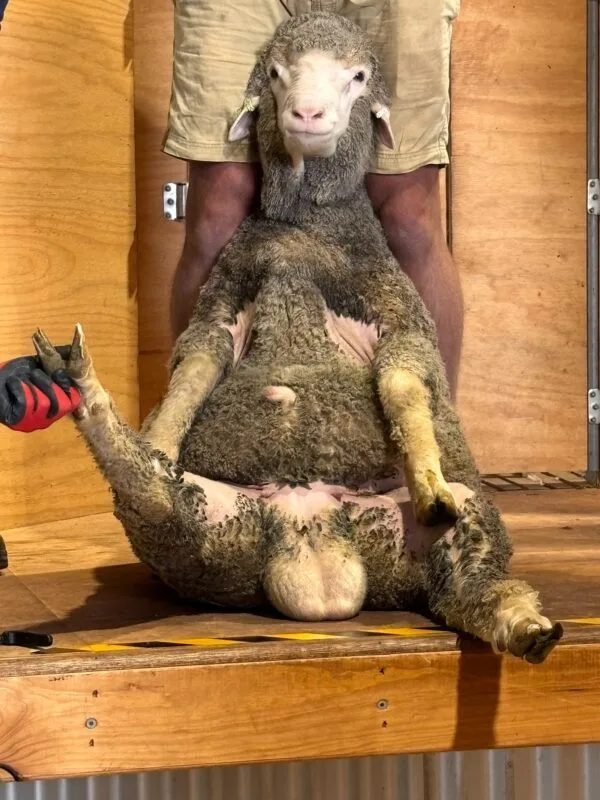
A ram may only represent a small part of the flock, but the decisions made around ram selection, health and preparation can influence a sheep enterprise for many years.
That was one of the key themes explored at the recent ‘RAMping Up Repro’ workshops held at Kyancutta and Charra on 20 and 21 July 2026. Attended by over 25 livestock producers, the practical workshop format combined pre-joining ram inspections, animal health and vaccination information, ram economics, reproductive management and plenty of discussion about the challenges producers are currently seeing on farm.
Dr Colin Trengove from Pro Ag Consulting led the practical ram assessment and reproduction sessions, while Zoetis Animal Health representative Caitlin Cameron discussed vaccination schedules, animal health and correct vaccination technique.
The aim of the workshops was not only to provide more information, but to help producers identify practical changes that could improve ram performance, reduce avoidable reproductive losses and achieve greater value from one of the flock’s most important investments.
Topics covered
- Pre-joining ram inspections using the “4 Ts”: teeth, toes, tackle and testes, with torso and temperament also considered
- Ram health, disease risks, biosecurity and vaccination practices
- The effects of heat, nutrition, shearing, sedation and other management activities on fertility
- Ram purchasing, selection, joining percentages and the economics of maintaining a productive ram team
- Ewe nutrition, condition scoring and management before and during joining
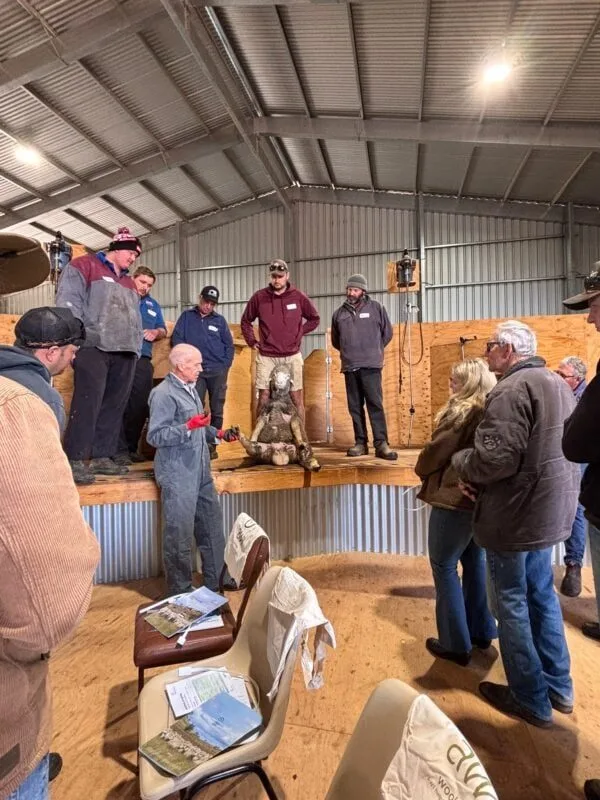
Above: Dr Colin Trengove demonstrating a practical ram assessment at Kyancutta.
A small number of animals with a big influence
One ram can contribute to an estimated 400–600 progeny during his working life. His genetic influence may then remain in the flock for up to 15 years through retained daughters and later generations.
That raises an important question for producers: are we giving our ram team the same level of attention as other major farm investments?
A ram may appear sound when viewed from a distance, but issues with feet, teeth, testicular tone, body condition or general health can reduce his ability to perform during joining. The workshop strongly encouraged producers to complete annual pre-joining inspections early enough to act on any problems.
The recommended timing discussed was around 12 weeks before joining. This gives producers time to replace unsuitable rams, manage health concerns and improve nutrition or condition where required.
“Pre-joining inspections avoid unnecessary loss of production due to poor reproductive performance, inspection and preparation of your ram team is a critical part of the farm calendar.”
Key messages for producers
- Inspect every ram approximately 12 weeks before joining, rather than waiting until the ram team is about to enter the ewe mob.
- Remember that heat stress, illness and stressful management activities can temporarily affect semen production and fertility.
- Avoid shearing rams within eight weeks of joining where possible, particularly when sedation is used.
- Check more than testicle size. Testicular tone, symmetry, lumps, feet, teeth, body condition and general mobility all matter.
- Treat ram purchases as long-term genetic and financial decisions—the characteristics you cannot immediately see may be just as important as physical appearance.
Looking beyond the basic inspection
The practical demonstrations showed producers how to safely assess a ram from front to back.
Teeth should meet the dental pad correctly so the ram can continue to graze and maintain condition. Feet and legs need to support the animal through joining, particularly when paddocks are large or conditions are wet. Testes should be even, firm and free from abnormal lumps or hardness.
Presenters also discussed the strong relationship between scrotal circumference and reproductive performance. However, measurement alone does not provide the full picture. Producers were encouraged to combine measurements with a thorough physical assessment and seek veterinary advice or testing where abnormalities are detected.
Nutrition was another strong discussion point. Rams need sufficient energy and protein to support sperm production and joining activity, but changes should be managed carefully. Sudden feed transitions, highly productive green feed and wet paddock conditions can create additional animal health and foot-management challenges.
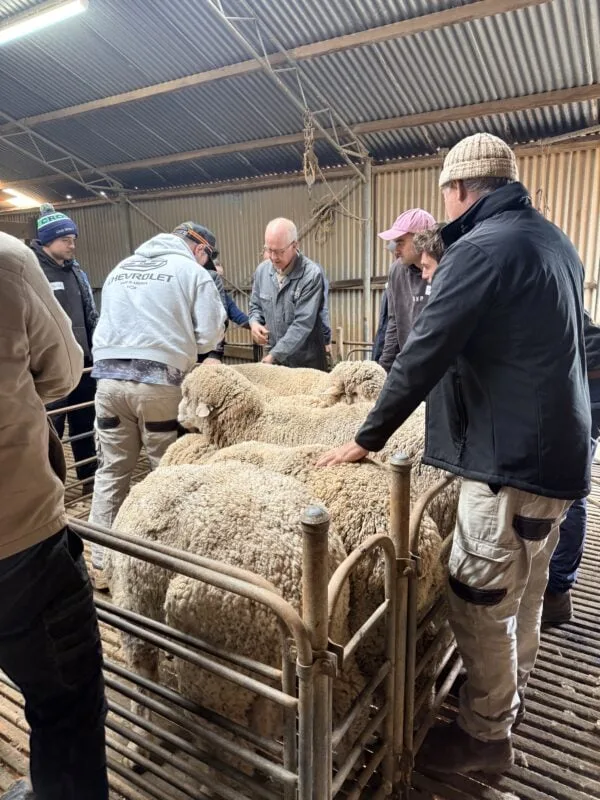
Above: Dr Colin Trengove demonstrating body condition scoring of rams at Charra.
Heat, handling and timing matter
Semen production is not an overnight process. Management events occurring several weeks before joining can still affect how a ram performs when he is needed.
Dr Trengove explained that sustained high body temperatures can temporarily reduce semen quality. Hot weather, fever and some management practices therefore need to be considered when planning joining preparation.
Rams that have been sedated for shearing purposes may have a reduced ability to regulate their body temperature. Producers were encouraged to carefully consider weather conditions when sedation is being used for shearing or other procedures and to discuss safe treatment and handling practices with their veterinarian.
These conversations were particularly relevant for Eyre Peninsula businesses, where seasonal conditions can shift quickly and sheep may need to transition rapidly from green feed to dry paddocks or stubbles.
What could you adopt before your next joining?
A useful starting point is to put a ram preparation date in the farm calendar—at least 12 weeks before joining.
From there, producers could:
- Inspect and condition score every ram, recording any concerns requiring follow-up
- Consider doing a fecal egg count to assess worm burden – rams are among the most susceptible to worms
- Review ram numbers, joining percentages and whether enough fit, working rams are available for paddock and mob size
- Plan shearing, vaccinations and animal health treatments so they do not clash with the semen-production period before joining
- Review the health status and biosecurity documentation of purchased rams, including appropriate quarantine arrangements
- Reassess rams after joining and consider culling animals that have lost excessive condition or are no longer physically sound
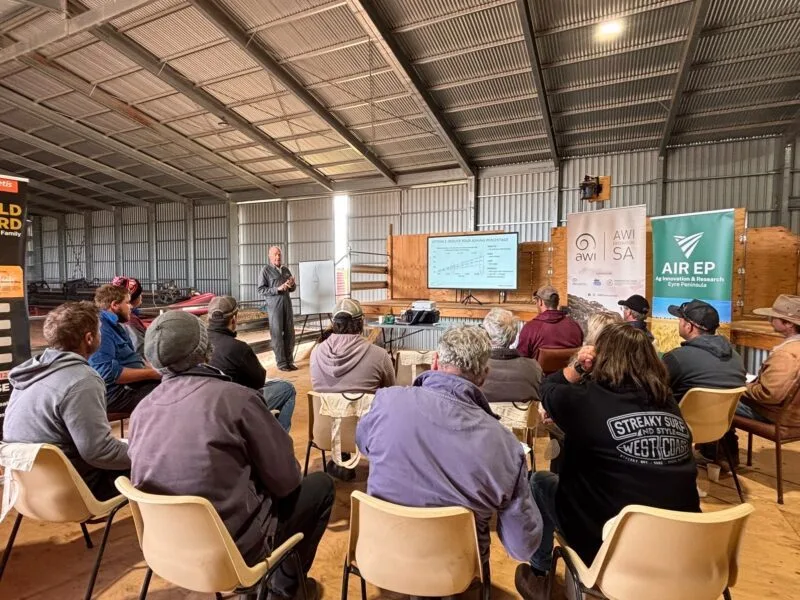
Above: Dr Colin Trengove discussing pre-joining ram assessments at Kyancutta.
Further information
Listen to the AWI 10-minute talk on ram preparation HERE
For further ram-management and reproduction resources, visit AWI Extension website
To register your interest in future livestock workshops or training opportunities, simply subscribe to the AIR EP newsletter via our website www.airep.com.au
For more information on future livestock events or to share feedback, contact Livestock Coordinator Hannah Gordon on 0408 311 122.
Thank you
AIR EP would like to thank the producers who attended and openly shared their experiences, questions and livestock management challenges.
Special thanks to the event hosts at Kyancutta and Charra for their generous time, resources, and allowing us to undertake practical demonstrations on farm. Thanks also to Dr Colin Trengove, Caitlin Cameron, Dr Jodie Reseigh-O’Brien and everyone involved in planning, promoting and delivering the workshops.
Acknowledgement
AIR EP formally acknowledges the funding, technical input and support provided by Australian Wool Innovation and Zoetis, which helped make these practical learning opportunities available to Eyre Peninsula livestock producers.
This event was supported by the Eyre Peninsula Landscape Board with funding from South Australian Government’s Landscape Priorities Fund.