Event Summary | 2025 Lentil Field Day
Holy Barbara! If you want to draw a crowd, simply add ‘lentils’ to your menu.
And I’m not talking about adding a spicy dahl to the footy club lunch board - be sure to stand downwind from that crowd – I’m referring to the agronomics and economics of South Australia’s most popular (and sometimes fussy) legume.
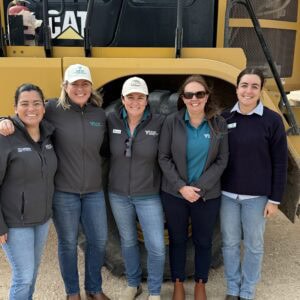
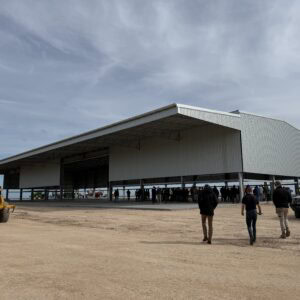
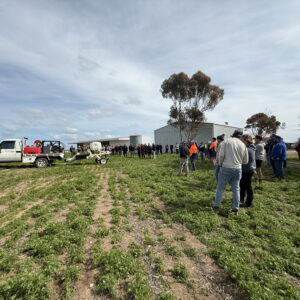
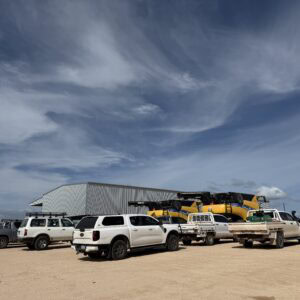
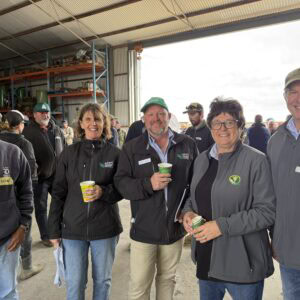
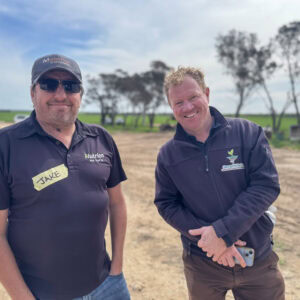
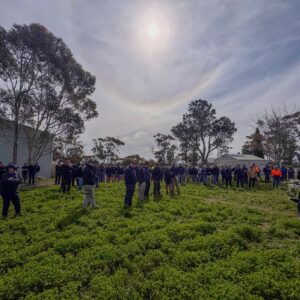
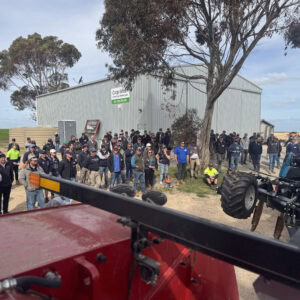
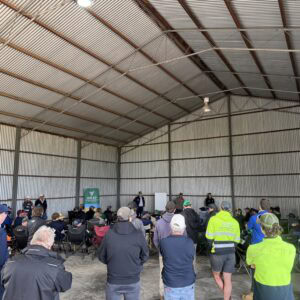
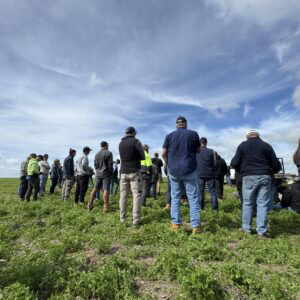
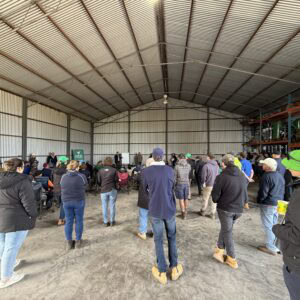
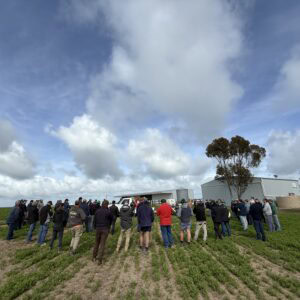
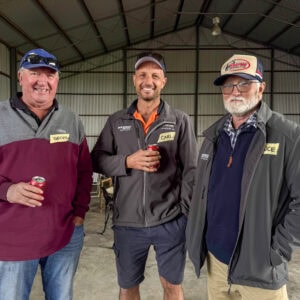
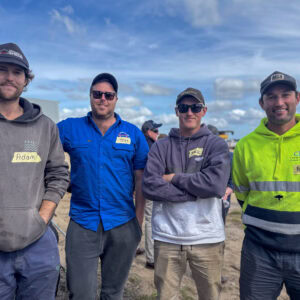
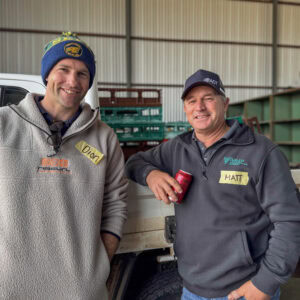
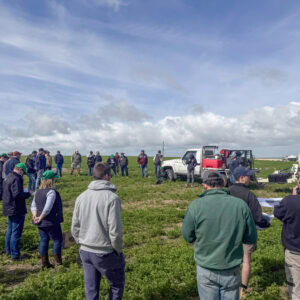
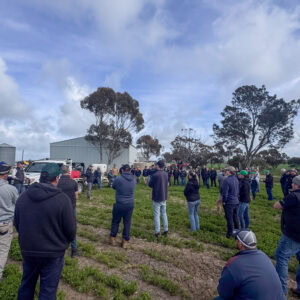
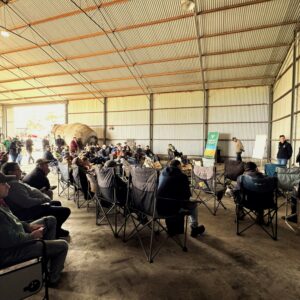
On Wednesday 9 September, over 180 individuals flooded Polkinghorne's shed at Lock to hear from researchers, agronomists and marketers, as AIR EP hosted the 2025 Lentil Field Day.
With input costs and land values skyrocketing since Covid, farming systems need to be more profitable than ever. So increasing the hectares we sow to high value crops, such as lentils, makes absolute sense right?!
But is there a risk of saturating the market that is deemed so lucrative?
Are farmers compromising ground cover or other aspects of the farming system, to get more lentils in the ground from one year to the next?
With a growing interest in lentils and increasing annual plantings—expected to reach 550,000–600,000 hectares in 2025—this event provided timely advice on how farmers can navigate the challenges and opportunities of this expanding crop.
Industry Snapshot
Marketing update by ADM SA Accumulation Manager, Adam Crabb
- Lentil area sown in SA has increased by 50,000–75,000 ha annually over the past 5 years
- Domestic demand for lentils is 800,000–1.2 million tonnes per year
- If yields are strong nationwide, supply may exceed demand
- On-farm storage is becoming increasingly common, not only to manage harvest logistics, but as a tool to wait out low prices
Lentils in EP Farming Systems - Building Biomass, Managing Nutrition & Varieties
Key Messages from Jason Brand, Sarah Day, Amy Keeley & Andrew Ware
Experts encouraged farmers to take a five-year systems approach when incorporating lentils. Focus on paddock history, soil type, stubble cover, herbicide use, and variety selection to set the crop up for success.
- Lentils prefer high stubble loads, especially from barley due to salinity tolerance
- Variability across farms, paddocks and regions makes it challenging to find specific answers for lentils
- If cereals aren’t lacking in minerals / nutrition, then it’s unlikely lentils will be either. Leave test strips to map or see visual differences in your crop
- Watch out for fertiliser burn on EP soils—phosphorus management is crucial for nodulation and N fixation
- Shallow sowing is becoming more common—be cautious with herbicides like Metribuzin
“The 2022 wheat stubble load was gold for lentil crop establishment this season. Livestock may not be the problem; it’s about managing cover effectively for multiple seasons ahead. Look at the whole system not just one year ahead, but several seasons ahead.” – Bruce Heddle, farmer
See this research paper from Jason Brand on the agronomics of pulses: https://grdc.com.au/resources-and-publications/grdc-update-papers/tab-content/grdc-update-papers/2024/02/the-agronomics-of-pulses-and-implications-of-new-varieties
Growing Lentils on Challenging Soils
Key Messages from Sam Holmes, James Cant & Andy Bates
- Salinity and lentils are not friends
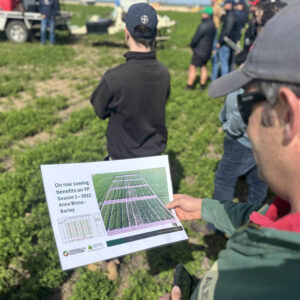
- Grey soils? Do a soil test to determine salinity levels. If EC>2, you should consider sowing on-row (no more than an inch away from the previous year row) to improve establishment and yield.
- On row sowing can be a very useful tool to help with crop vigour and establishment on saline soils.
- Lentils are very soil pH sensitive, if you are seeing areas of poor establishment do a simple in field pH test to rule out soil acidity as your constraint.
Check out this additional resource from Sam Holmes – On Row Sowing https://sagit.com.au/project/on-row-sowing-benefits-on-yorke-peninsula-what-are-the-drivers-cas4822/
And stay tuned for our upcoming newsletter article providing 'on row sowing' tips from YP farmer Ben Wundersitz, Anna Binna.
Shared Farmer Learning & Observations
Rotation and Stubble
- Lentil performance varies significantly between regions—YP, Mid North and EP differ
- Interaction with stubble / straw load in paddocks – stubble + cover is critical!
- Have reduced lentil rotation to every 2–3 years due to consequences of growing too intensively
- While some farmers find barley stubbles result in better lentil yields, other farmers are seeing success on wheat stubble
“This is a classic example of needing to observe your own system—experts won’t always have the answer.” – Jason Brand
Tailoring Rotations to Soil Types
- Grow vetch on heavier soils, save the loam for wheat/lentil rotations
- Don’t push lentils too far—sandy soils with poor cover can result in poor crop establishment
- Have possibly pushed the envelope too far (growing lentils on ameliorated sandy soils) – ground cover has been challenging, so we changed rotations to manage this as we were struggling with establishment.
“It’s a common issue. Some farmers have returned to growing lupins as a result of challenges in trying to grow lentils on sandhills.” – Jason Brand
How technology can fit into your lentil journey
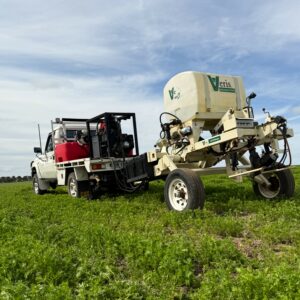
Veris Mapper with James Cant
The Veris Mapper is an ‘on-the-go’ soil testing machine that collects soil samples, measures pH in real-time, and records geographic position. The machine creates detailed soil pH maps, which farmers and agronomists can use for site-specific management, such as variable rate lime application to address within-field variability and improve crop yields. Benefits of Veris pH mapping include:
- Identifies variability: The maps reveal zones within a field that have different soil pH levels.
- Site-specific management: Farmers can apply inputs, such as lime, only where they are needed, reducing waste and costs.
- Improved yields: Even pH across a paddock can lead to more consistent crop yields.
- Informed decision-making: The in-depth knowledge provided by these maps helps farmers make more informed decisions about soil management.
Key Questions from the Floor
Q: With acidity issues emerging across EP, how can farmers mitigate issues with growing lentils in acidic soils?
A: 5.8pH or above is ideal but depends on where the acidity is in the soil profile. With acidity at depth, the only way to address is via long term strategies including good soil incorporation. Bringing clay to the surface, without incorporation, is not the answer.
Q: Which system is better for growing lentils? Disc or tyne?
A: Farmers need to do the economics of changing the system over. Identify what you are trying to achieve. Have seen both systems work very well.
What Farmers Are Taking Home
“I’ll be trying on-row sowing on my saline soils. Mapping pH, liming with VRT, and sowing early are all part of the plan—but I’ll be keeping an eye on prices.”
“I’ve avoided on-row sowing in the past, but I’ll be looking into it now. Storage is also on the radar—I’ve been using bags, but longer-term storage makes more sense.”
Final Thoughts
With variability across regions, soils, and systems, there’s no one-size-fits-all answer to lentil production. But what’s clear is this: understanding your own system—from soil to stubble, sowing depth to storage—is the key to growing smarter, more resilient lentil crops.
Special thanks to the Polkinghorne family for hosting the event and sharing their valuable experience and insights to their farming operation.
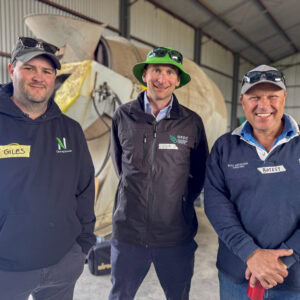
Many thanks also to AIR EP Chair Bill Long for facilitating the day. And to our additional speakers, Sarah Durdin and Shaun Gudzenovs of Bunge, and Hayley Lewis of T-Ports for providing an update on lentil segregations for the coming season.
Something that wasn’t discussed on the day but that also should be considered is the high fire risk when harvesting lentils. Check out this GRDC article by Ben White with 10 tips to improve harvester fire safety: https://groundcover.grdc.com.au/farm-business/harvest/ten-tips-to-reduce-the-risk-of-harvester-fires-this-season, which also provides links to other resources for getting ready to harvest lentils.
Visit the Grain Legume Extension Hub for tools and resources on Pulse Agronomy in Southern Australia.
Project name: Development and extension to close the economic yield gap and maximise farming systems benefits from grain legume production in South Australia (or GRDC Legume Extension project) UOA2105-013RTX
Internal code: 010_AIR
Funding Partner: GRDC
More Information: Pulse Extension & Development