Frost risk to yield reward: spreading risk and making early sowing count
Frost management, crop diversity and the opportunities from earlier sowing were firmly on the agenda when 36 growers, advisers, researchers and industry representatives joined AIR EP’s From Frost Risk to Yield Reward crop walk at Tooligie Hill and Lock on 7 August. The day brought together local trial results and the experience of independent consultants, researchers and growers to discuss how farming systems can better manage frost risk while still chasing profitable yields.
The frost trial sites provided a clear reminder of just how variable frost can be across the landscape. At the high-risk site, 15 frost events and 125 hours below 0°C had been recorded at canopy height, compared with 11 events and 87 hours below 0°C at the nearby medium-risk site. Frost damage was already evident, particularly in lupins and faba beans.
A strong theme from the discussion was that there is no single solution to frost. Instead, growers can look to spread risk across crop types, sowing dates and crop phenology, rather than having large areas flowering at the same time. Kenton Porker highlighted the value of flowering diversity, particularly in a season where warm conditions have pushed crops quickly through development.
Winter and slower-developing cereals can play an important role in creating that diversity. Colin Edmondson discussed the fit of Mowhawk quick winter wheat for earlier April sowing on Eyre Peninsula. In AIR EP trials, Mowhawk has shown an ability to hold back heading while still developing early enough to avoid the worst of a hot spring. This season, Mowhawk sown around 5–10 April was at a similar growth stage in early August to Scepter or Tomahawk sown around 10–15 May — a difference of about 40–45 days. He suggested growers need at least 14 days difference in maturity to create meaningful variation in frost exposure. Neo barley is another option for earlier sowing.
For pulse crops, the discussion highlighted the importance of paddock and soil-type selection, disease management and understanding how different crops respond to frost. Experience from the Mid North has also raised interest in mixed lentil and faba bean stands in high-risk areas, although harvest, storage and grain cleaning need to be considered.
At the Yield Frontiers trial near Lock, attention shifted to how growers can use sowing time, nutrition and crop choice to push yield and profitability. The discussion identified 20 April to 5 May as a useful emergence window in the Lock area, while also recognising the challenge of dry starts and delayed emergence. Diversity becomes even more valuable when the season does not follow the plan.
Barley continues to feature strongly in this system. The group discussed early-sown Neo barley as a way to increase diversity without simply adding more wheat varieties. Key considerations for lifting yield and profitability around Lock included sound background nitrogen, sand amelioration, barley in high frost-risk areas, maintaining pasture in the rotation, spreading variety risk and setting realistic yield targets. A practical rule of thumb was to aim to finish sowing by mid-May, which means getting started around mid-April when conditions allow.
The take-home message was not to try to eliminate frost risk altogether, but to build a farming system that is less exposed to any one frost event. Matching varieties to sowing opportunities, creating genuine differences in flowering time, spreading crop and sowing-date risk, improving soils and getting nutrition right all provide growers with more ways to protect yield while making the most of favourable seasons.
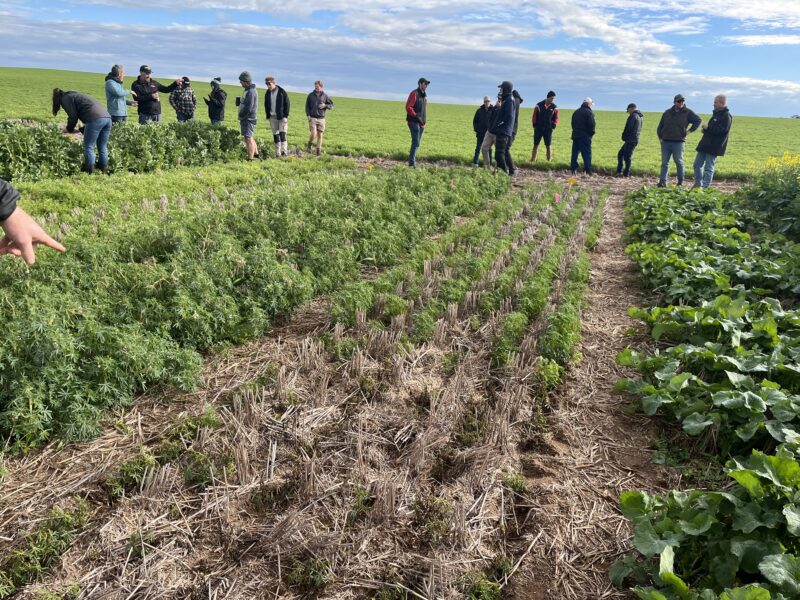
Above: Lupins got smoked at the high frost risk trial site in 2026.
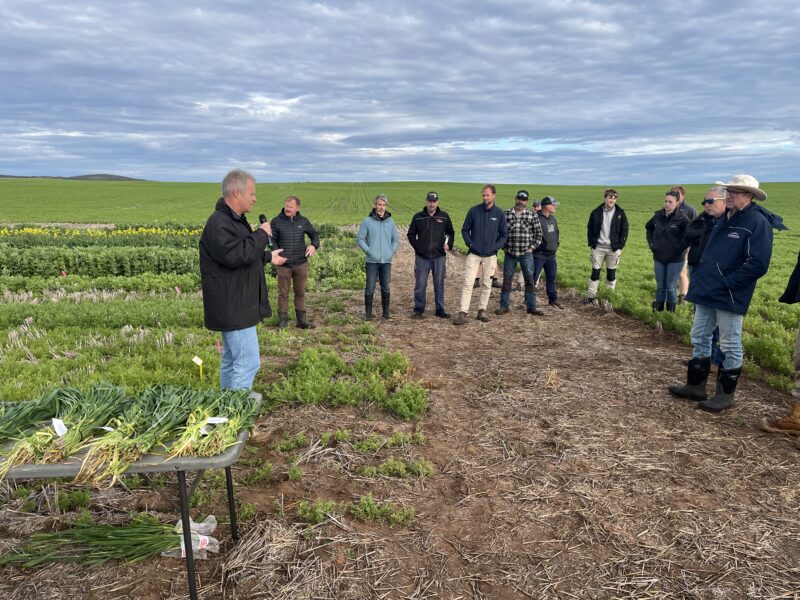
Above: Andrew Ware, EPAG Research, presenting results from the Further Frost Tactics trial site at Michael Agars’, Tooligie Hill.
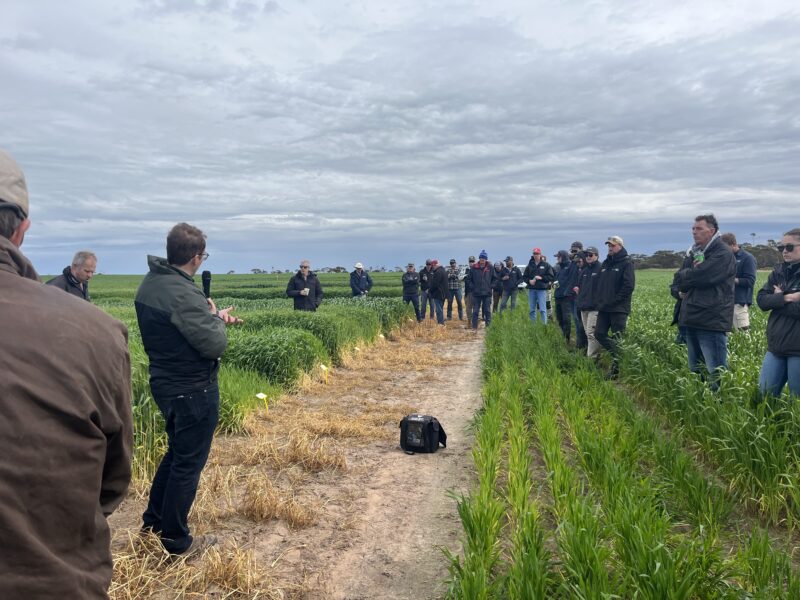
Above: Kenton Porker, CSIRO, presenting at the Hyper yielding and profitable cereals (Yield frontiers) trial site at Gus Glover’s, Lock.
Thanks to Gus Glover and Michael Agars for hosting the trials, GRDC for funding the trials, and EPAG Research for running the trials.