Limpy feet in your flock? New resources available to help on-farm diagnosis
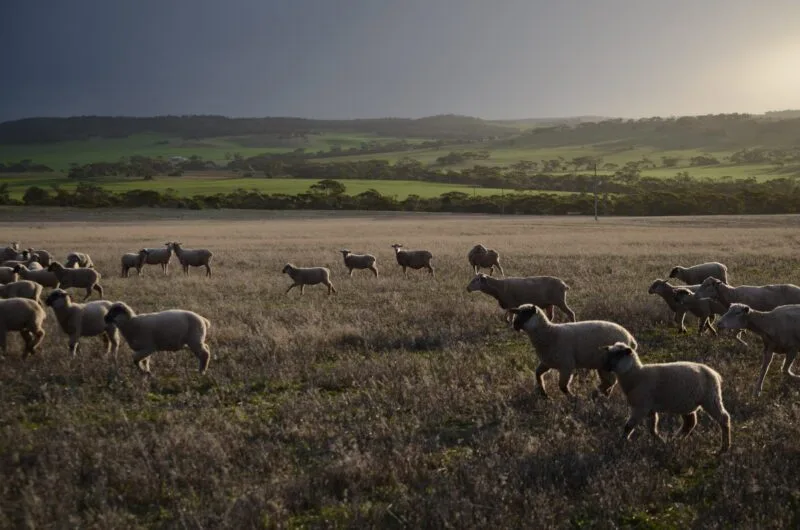
While we will never knock back a high rainfall year on the Eyre Peninsula, they can often present forgotten challenges for livestock producers as soil remains wet and medic pastures abundant.
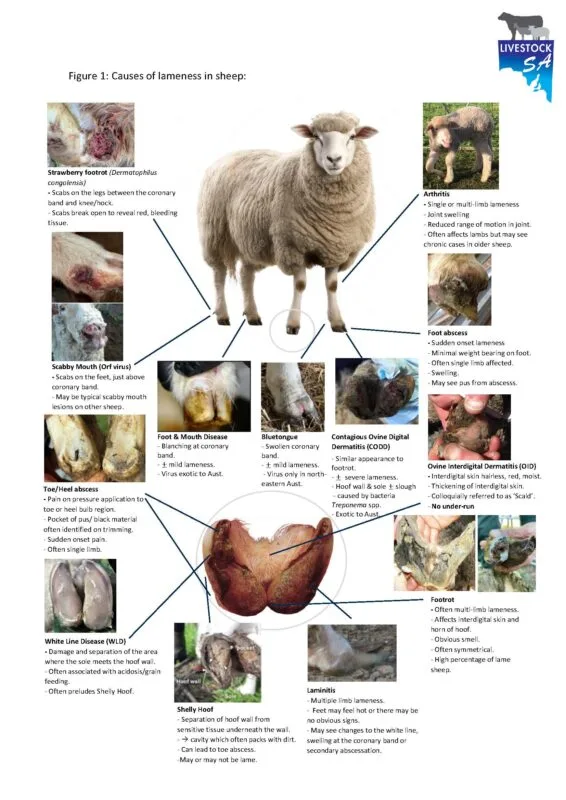
The Livestock SA biosecurity Happy Feet, Happy Sheep program focuses on understanding and diagnosing the key causes of lameness in sheep. When investigating lameness (limpy feet) in your sheep, it is important to consider that there are numerous causes, both infectious and non-infectious, and a correct diagnosis is essential to ensure effective management and prevention. The common causes of lameness are listed as follows:
Infectious Causes
- Strawberry footrot (proliferative dermatitis): Bacterial infection (Dermatophilus congolensis) leading to scabs on the legs from the coronet to the knee or hock. Lesions below the fetlock are most common and sheep may become extremely lame if the coronary band is involved.
- Orf (scabby mouth): Viral infection of the foot, scabs develop above the coronet with no involvement of the hoof. Hooves may slough with multiple lesions on the coronary band.
- Arthritis: Joint infection. May occur in young lambs following umbilical infection at birth or post marking/dipping lameness. May or may not have visibly swollen joints.
- Foot abscess and septic arthritis: Caused by bacterial infections entering through the interdigital skin, particularly if the skin is predisposed by sustained wet pasture conditions.
- OID (Ovine Interdigital Dermatitis): Often precedes footrot and causes superficial inflammation (inflammation of the interdigital skin with no under-run).
- Footrot^: A highly contagious bacterial disease affecting the interdigital skin and horn of the hoof.
- Bluetongue^: An arthropod borne viral disease spread by Culicoides midges. May present as lameness with haemorrhaging at the coronary band, drooling, swelling of the lips, tongue and face and oral ulceration. Death can occur.
Exotic Causes of Lameness
- Contagious Ovine Digital Dermatitis (CODD)^*: More severe infection than footrot commonly reported in the UK. It causes detachment of the hoof horn, and it associated with Treponema spp – a bacterial infection.
- Foot and Mouth Disease^*: A highly contagious viral disease. Sheep may show lameness due to inflammation of the coronary band or interdigital skin, and erosions/ulcers on the dental pad and tongue.
Non-Infectious Causes
- Trauma: Cuts, bruises, or foreign bodies (e.g. grass seeds).
- Overgrown hooves: Predispose to abnormal gait and secondary infections.
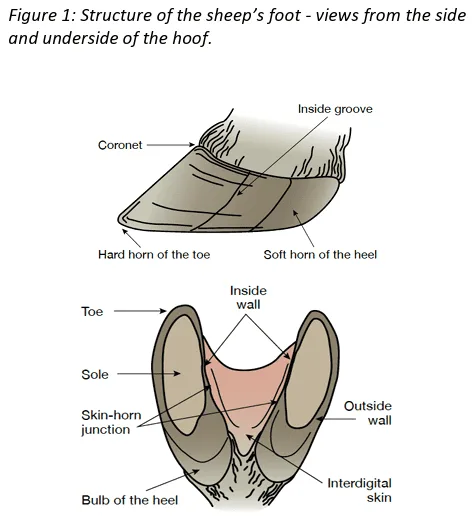
- White Line Disease/Shelly Hoof: Damage to the area where the sole meets the hoof wall. Limited studies have highlighted acidosis/laminitis, nutritional imbalances, the environment, and infectious causes (Fusobacterium necrophorum and Dichelobacter nodosus) as potential contributing factors to the disease.1 There is also likely to be a genetic association. White Line Disease often leads to separation of the hoof wall from the sensitive tissues underneath resulting in formation of a cavity referred to as “Shelly Hoof”.
- Laminitis: inflammation of the sensitive laminae due to ingestion of excessive carbohydrates (either grain overload or pasture acidosis).
NOTE: ^ Notifiable disease; * Emergency Animal Disease. Report suspicion of a notifiable disease to the 24/7 Emergency Animal Disease Hotline 1800 675 888 or contact your local Animal Health Officer.
The aim of the Happy Feet, Happy Sheep program for producers is to:
- Learn how to accurately identify causes of lameness, and distinguishing footrot from other causes
- Improve confidence in managing active cases on farm
- Reduce production losses linked to lameness
- Understand key risk factors and how footrot spreads
- Develop a clear, practical footrot prevention plan for your property
- Strengthen on‑farm biosecurity to help keep footrot out long‑term
Resources
Learning modules, identification and diagnostic tools and videos are available on the Livestock SA Happy Feet, Happy Sheep webpage for producers to work through at their own pace.
Watch the AWI 10 Minute Talk on Foot Abscess in Sheep
Unable to locate a vet in your area? Phone A Vet provides professional telehealth veterinary consultations for livestock producers.
Looking for more information?
Need a Happy Feet, Happy Sheep workshop in your area? Simply contact Livestock SA Project Officer Tanya Dobrijevic at [email protected] or (08) 8297 2299, or EP Livestock Coordinator Hannah Gordon on 0408 311 122.