
Regen Ag Forum brings the conversation into the paddock
Growers, advisers and researchers gathered at Ungarra on 29 September for a practical look at what regenerative agriculture could mean in Eyre Peninsula farming systems.
The morning Regenerative Ag Forum featured Joel Williams from Integrated Soils, Lilia Jenkins from Cesar Australia and Dr Mark Farrell from CSIRO, covering nutrient efficiency, soil and plant health, beneficial insects, pest and disease management and the STRAP* regenerative agriculture project. After lunch, the group headed into the paddock for an in-field workshop, visiting the lower EP STRAP trial site and two local farming paddocks.
The strongest message from the day was that regenerative agriculture is not a fixed recipe. Rather, it is about understanding your system, identifying the outcome you want and testing practical changes that suit your soils, climate and business.
Joel encouraged growers to start small, test changes and measure the response, rather than making wholesale changes without first understanding the risks. That message carried through strongly in the paddock, where discussion centred on soil constraints, weed pressure, crop diversity, biological inputs, livestock integration and the realities of making new practices work on-farm.
Key messages
- Focus on outcomes, not labels. Improving nutrient efficiency, soil function, resilience and profitability is more important than whether a practice is called “regenerative”.
- Start small and test it. Strip trials, plant testing and paddock comparisons can help growers work out what is genuinely delivering value.
- Diversity can help build resilience. Crop and plant diversity, rotations and beneficial insects were all discussed as ways of reducing reliance on single management tools.
- Work with the soil you have. The afternoon visits highlighted how sandy soils, hard-setting layers, low organic carbon at depth and weed pressure can shape what is practical.
- Manage the transition. Changing farming systems needs to be balanced against production risk, machinery, livestock, economics and seasonal conditions.
The STRAP trial generated particularly strong discussion around carbon cycling, soil biology, nutrient management and how different regenerative approaches perform over time. Local paddock visits then put those ideas into context, giving participants the opportunity to discuss how regenerative principles can be adapted to different soil types, farming systems and practical on-farm constraints. The afternoon reinforced that there is no single pathway, with growers encouraged to test, observe and refine practices to suit their own business and landscape.
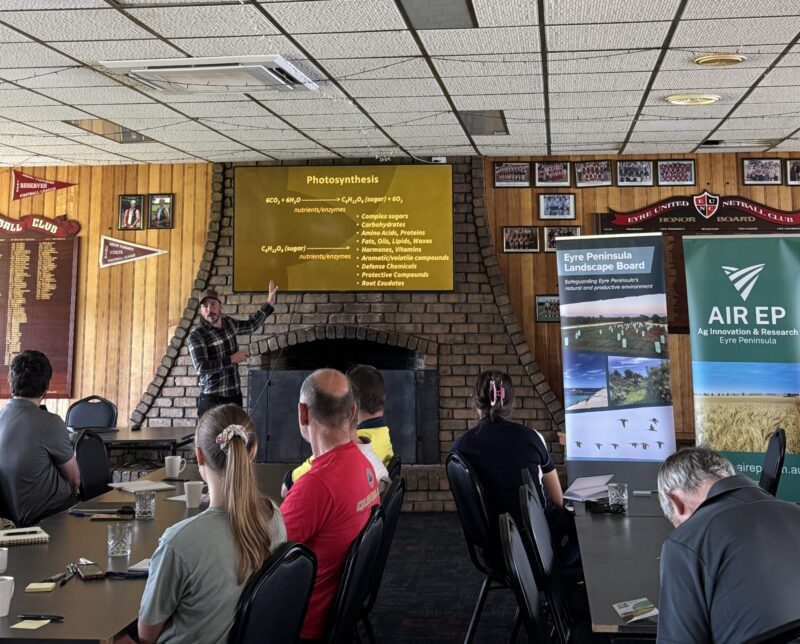
Joel Williams (Integrated Soils) presenting at the forum.
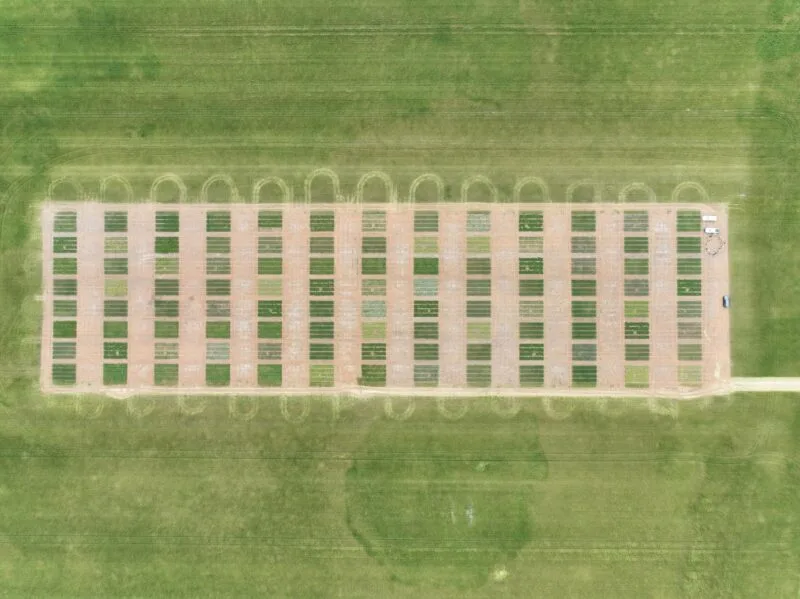
The Ungarra STRAP Trial site from above. Taken by Nathan Peters.
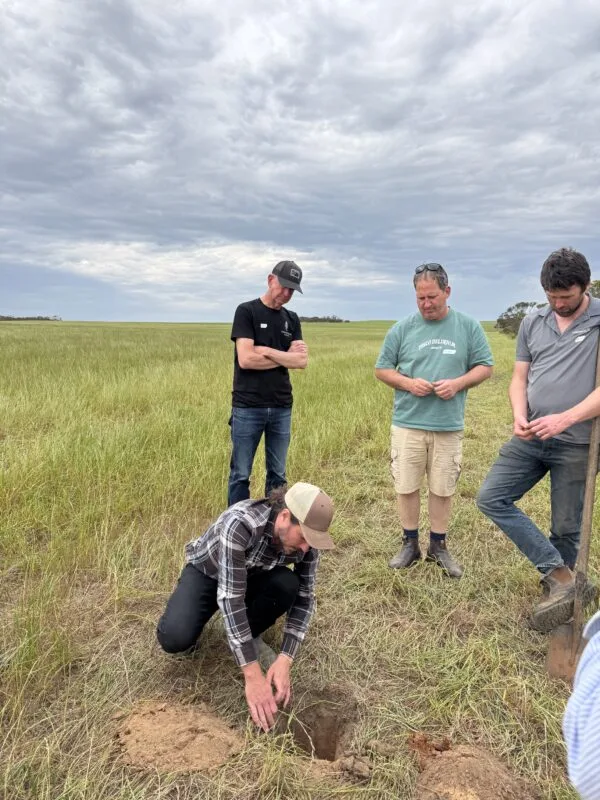
Joel Williams inspecting the soil at one of the afternoon paddock sites.
Where to next?
For growers interested in trialling some of the ideas discussed, the practical advice was simple: choose one manageable change, compare it with your current practice and measure the outcome.
If you have a regenerative agriculture speaker that you’d like to hear from on the EP, please reach out to AIR EP Project Officer Bek Peters – [email protected].
Thank you to Joel Williams, Lilia Jenkins, Dr Mark Farrell, EPAG Research, the local growers who opened their paddocks, the Ungarra Complex Committee for providing the catering and everyone who contributed questions, observations and experience throughout the day.
The Regenerative Ag Forum was delivered through the Eyre Peninsula Sustainable Agriculture Program with funding support from the Eyre Peninsula Landscape Board. The afternoon workshop also included the Stress Testing Regenerative Agriculture Principles (STRAP) trial, involving CSIRO and EPAG Research.

*What is the STRAP project??
Drought resilience in novel emerging dryland farming practices – A scientific and economic basis (Stress Testing Regenerative Agricultural Practices – STRAP)
The project aims to rigorously study regenerative cropping and pasture management to boost drought resilience in southern Australia’s dryland farming systems. It is farmer-led with scientific support from CSIRO, involving five long-term trials across key eco-climatic zones and four large demonstration trials. The data collected will be modelled to predict outcomes of different management scenarios, helping stakeholders visualize impacts on soil resilience and sustainable productivity. There are 6 core treatments being tested across the 5 trial sites in southern Australia (Ungarra, KI, Conmurra, Murrayville and Balranald).
- Hyper-profitability – Purposeful intensive management to extract long term production and profit
- Pasture inclusion – Pasture phase to increase belowground inputs
- Diverse within – Intercropping of complementary species to build resilience
- Legumes for N – Purposeful bias towards legumes with high N fixation and lower HI to build soil organic N
- Cover focus – Lengthening the window of living plants to build microbial activity and resilience
- Amendment driven – Alternate approaches to nutrition with SOM co-benefits
More details on the treatments and activities to come! EP has a trial site near Ungarra and a demonstration site at Port Kenny. The trials will run initially for four years, with the hope of further funding to make these longer term trials. It is currently funded by the Australian Government’s Future Drought Fund Long Term Trial program, led by CSIRO and Ag Excellence Alliance, and is being delivered on Eyre Peninsula in partnership with AIR EP and EPAG Research.