
New clay calculator takes the guesswork out of tackling water repellent soils
By Brett Masters, EPAG Research
A question that is often asked by farmers and landholders when planning to undertake clay spreading to address water repellence is, “What rate of clay do I need, to ensure that the job is done properly?”.
To help answer this question, an easy online calculator has recently been launched by the Western Australian Department of Primary Industries and Regional Development.
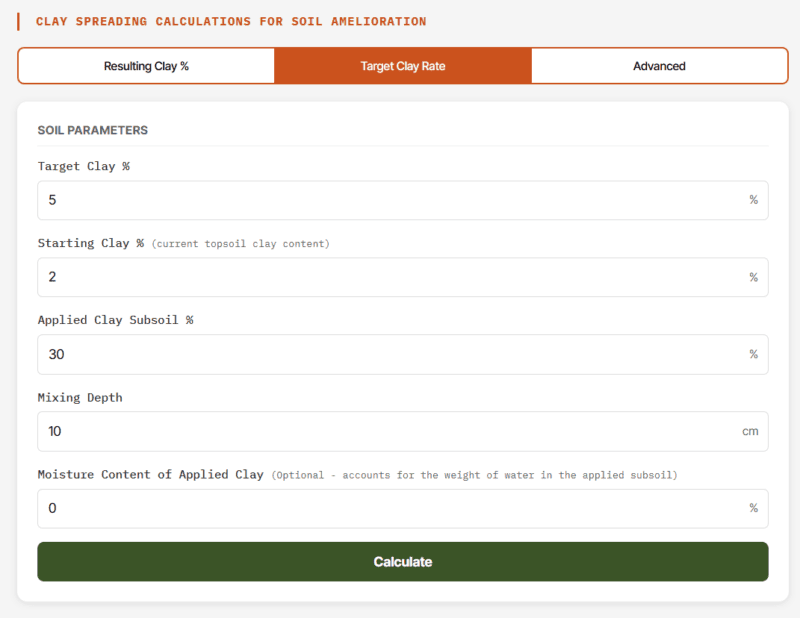
This easy to use, practical tool allows users to enter data specific to their property and soil type, including:
- The current clay content of the surface soil
- The clay percentage in the B horizon material
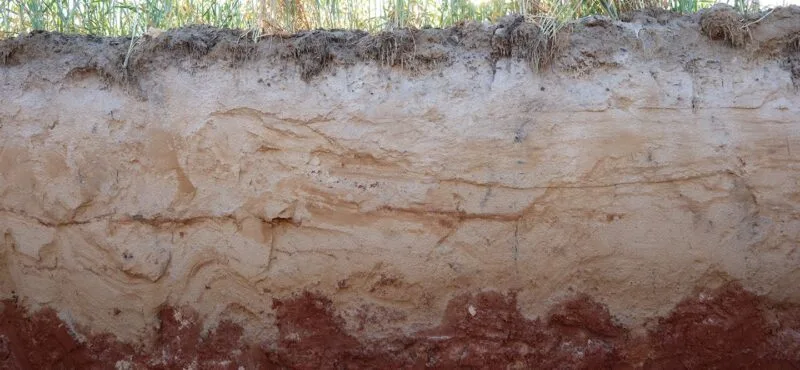
- A target clay content for the estimated depth of incorporation given the user’s intended incorporation method (i.e. 10-20 cm with equipment such as offset discs or tyne cultivators and 30-40 cm or deeper with a rotary spader).
With one click, this online tool will calculate the clay rate you should target to effectively address this constraint.
Previous work indicates that increasing the clay content in the surface soil (0-10 cm) above 5% can be effective in overcoming surface water repellence, which restricts crop establishment, for decades. Clay content in Eyre Peninsula B horizon soils can vary from less than 10% to approximately 40% clay, with historical rates of 100 to more than 300 t/ha applied.
An added feature of this tool compared to previous “simple clay calculators”, is an “advanced option” which can use analysis results of clay samples to estimate the concentrations of nutrients such as potassium, sulphur, and phosphorus, which might be available in the applied clay.
When thinking about clay rates, it is also important to consider that many B horizon clays on Eyre Peninsula contain high amounts of reactive calcium carbonate (lime). When applied in large amounts, lime reduces the availability of important nutrients such as phosphorus, manganese, zinc and iron. It is advisable to assess the lime percentage in your clay to understand how this will impact paddock nutrient status.
Access the Clay Calculator Tool: https://soilqualityknowledgebase.org.au/resources/easy-clay-calculator/
For further information on clay rates or ameliorating sandy soils, contact:
Brett Masters, Research Agronomist, EPAG Research
Email: [email protected]
Acknowledgement
This article is brought to you by the EP Landscape Board’s Sustainable Agriculture Program, funded by the Australian Government’s Natural Heritage Trust under the Climate-Smart Agriculture Program.
